
How to Sell Products on Blinkit: Complete Seller Onboarding Guide & Quick Commerce Growth Strategy
Introduction
The rapid growth of quick commerce in India has transformed consumer buying behavior. Customers now expect groceries, personal care products, household essentials, and even electronics to be delivered within minutes. As one of India’s leading quick commerce platforms, Blinkit has created significant opportunities for brands, manufacturers, distributors, and sellers looking to expand their reach.
If you’re wondering how to sell on Blinkit, this comprehensive Blinkit seller onboarding guide covers everything you need to know—from Blinkit seller registration and product listing to inventory management and growth strategies.
Whether you’re a new business or an established brand, understanding the Blinkit onboarding process can help you unlock new revenue streams and build a successful quick commerce business.
Why Sell on Blinkit?
Blinkit has become a leading instant delivery platform and online grocery marketplace, serving millions of customers across India through its extensive dark store network.
Key benefits of becoming a Blinkit marketplace seller include:
- Access to a rapidly growing quick commerce marketplace
- Increased product visibility and discoverability
- Faster inventory turnover
- Expansion into new markets without opening physical stores
- Strong demand for FMCG, grocery, personal care, and D2C products
- Efficient warehouse fulfillment and order management
For brands seeking ecommerce marketplace expansion, Blinkit business opportunities offer significant growth potential.
How to Become a Blinkit Seller in India
Understanding the Blinkit seller onboarding process is the first step toward success.
Step 1: Complete Blinkit Seller Registration
The first step in the Blinkit seller registration online process is submitting your business information, product categories, and compliance documents.
This stage initiates your Blinkit supplier onboarding process and allows Blinkit to evaluate your business.
Typically, sellers need:
- GST Registration
- PAN Card
- Business Registration Documents
- Bank Account Details
- Product Certifications (if applicable)
- Brand Authorization Documents
Having accurate documentation helps speed up the Blinkit seller verification process.
Step 2: Submit a Seller Application
Once your documents are ready, you can proceed with the Blinkit seller application process. Blinkit evaluates products, categories, and supply capabilities before approving sellers.
The onboarding team may review:
- Product quality
- Market demand
- Pricing competitiveness
- Supply consistency
- Inventory readiness
This stage is an important part of the Blinkit supplier onboarding process.
Step 3: Category Manager Approval
One of the most important stages of Blinkit seller onboarding is category manager approval.
During this process, Blinkit evaluates:
- Product-market fit
- Category demand
- Competitive positioning
- Margin structure
- Packaging standards
Approval from the category team is often required before products can move forward for listing.
How to List Products on Blinkit
After approval, sellers can begin uploading products through the Blinkit seller portal.
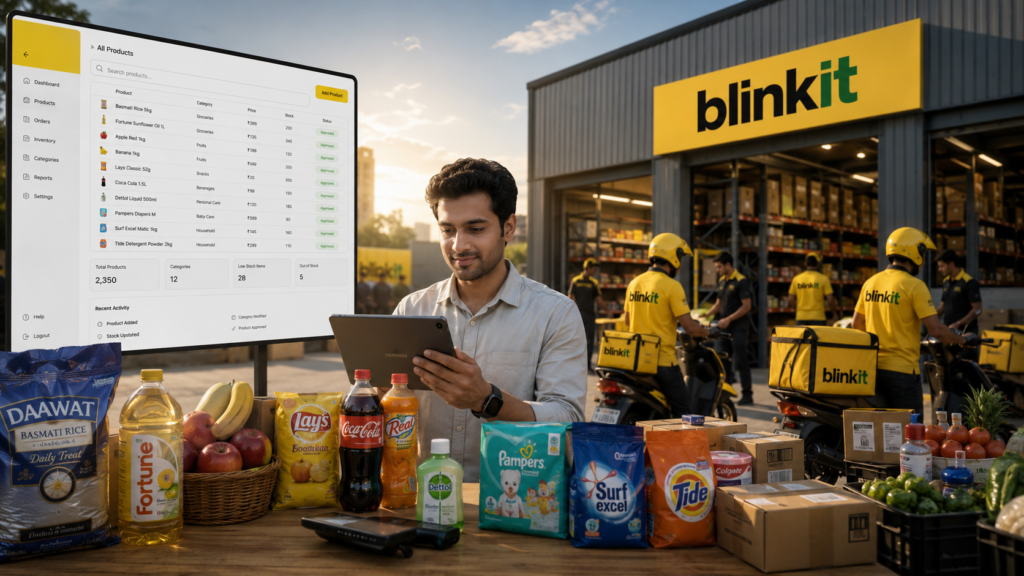
A successful Blinkit product listing guide includes:
- Accurate product titles
- Clear descriptions
- High-quality images
- Correct SKU information
- Category mapping
- Pricing details
- Compliance information
Optimized product listings improve product discoverability and help increase conversion rates.
Blinkit Inventory Management and Warehouse Onboarding
One of the most important aspects of selling on Blinkit is effective Blinkit inventory management.
Because Blinkit operates through a sophisticated hyperlocal delivery network, sellers must ensure inventory is available for rapid fulfillment.
Blinkit’s dark store operations rely on accurate stock availability and timely replenishment. Sellers must ensure:
- Real-time inventory updates
- Consistent stock availability
- Efficient inventory replenishment
- Proper SKU management
- Forecast-based planning
The Blinkit warehouse inventory onboarding process may involve supplying inventory to designated fulfillment centers or approved distribution points.
Effective Blinkit inventory management helps avoid stockouts and improves seller profitability.
Understanding Blinkit’s NPI Product Onboarding Process

Brands launching new products must often go through a Blinkit NPI product onboarding process.
This process may include:
- Product evaluation
- Category review
- Commercial discussions
- Packaging assessment
- Demand forecasting
New product onboarding allows brands to test market demand and expand their product catalogue within Blinkit’s ecosystem.
How to Grow Sales on Blinkit
Successfully completing Blinkit seller onboarding is only the beginning. To grow sales on Blinkit, businesses should focus on long-term optimization.
Optimize Product Availability
Maintain consistent inventory levels to avoid missed sales opportunities. Products that frequently go out of stock often lose visibility within marketplace algorithms.
Focus on High-Demand Categories
Products with high purchase frequency generally perform best on a quick commerce marketplace.
Improve Product Visibility
Strong inventory turnover helps maintain product availability across Blinkit’s dark store operations while reducing fulfillment challenges.
Monitor Purchase Orders
Track Blinkit purchase orders regularly and respond quickly to inventory requirements. Efficient fulfillment improves seller performance metrics.
Analyze Customer Demand
Use sales data and inventory trends to identify fast-moving products and optimize your supply chain strategy.
Common Challenges During Blinkit Seller Onboarding
While learning how to register as a seller on Blinkit, businesses may encounter challenges such as:
- Documentation delays
- Product approval timelines
- Inventory synchronization issues
- Pricing competitiveness
- Demand forecasting errors
Working with experienced marketplace onboarding specialists can help streamline the Blinkit onboarding process and reduce operational challenges.
Scale Your Blinkit Business with Sales Strive
Successfully selling on Blinkit requires more than just registration. From marketplace onboarding and product listing optimization to inventory planning and growth strategy, every stage impacts your results.
At Sales Strive, we help brands navigate complex marketplace ecosystems and unlock sustainable growth opportunities. Our team supports businesses with marketplace onboarding, catalog management, inventory optimization, account management, and marketplace expansion strategies to help maximize performance on platforms like Blinkit.
Whether you’re a new seller or an established brand looking to grow sales on Blinkit, Sales Strive can help accelerate your quick commerce success.
Conclusion
The opportunity to sell on Blinkit has never been greater. As India’s quick commerce industry continues to grow, businesses that successfully complete the Blinkit onboarding process, optimize inventory management, and implement a strong marketplace growth strategy can generate substantial long-term revenue.
By focusing on product visibility, inventory availability, and customer demand, brands can build a profitable presence within Blinkit’s instant delivery ecosystem.
If you’re ready to grow your business on Blinkit, partnering with experienced marketplace specialists can simplify onboarding and accelerate success.
Frequently Asked Questions
1. How do I sell products on Blinkit?
To sell products on Blinkit, businesses must complete Blinkit seller registration, submit required documents, undergo category approval, and complete the onboarding process before listing products.
2. What documents are required for a Blinkit seller account?
Common requirements include GST registration, PAN card, business registration documents, bank account details, and relevant product certifications.
3. How long does the Blinkit seller onboarding process take?
The timeline varies depending on documentation, category approval, and product evaluation requirements. Completing documentation accurately can speed up the process.
4. How does Blinkit inventory management work?
Sellers must maintain stock availability, manage inventory replenishment, and ensure accurate SKU tracking to support Blinkit’s dark store network.
5. Can D2C brands sell on Blinkit?
Yes. Many D2C brands on Blinkit leverage the platform to improve product visibility and reach customers through quick commerce channels.
6. How can I increase sales on Blinkit?
Focus on optimized product listings, inventory availability, competitive pricing, demand forecasting, and effective marketplace growth strategies to improve performance.
 hello@salesstrive.in

2 Responses