Blog
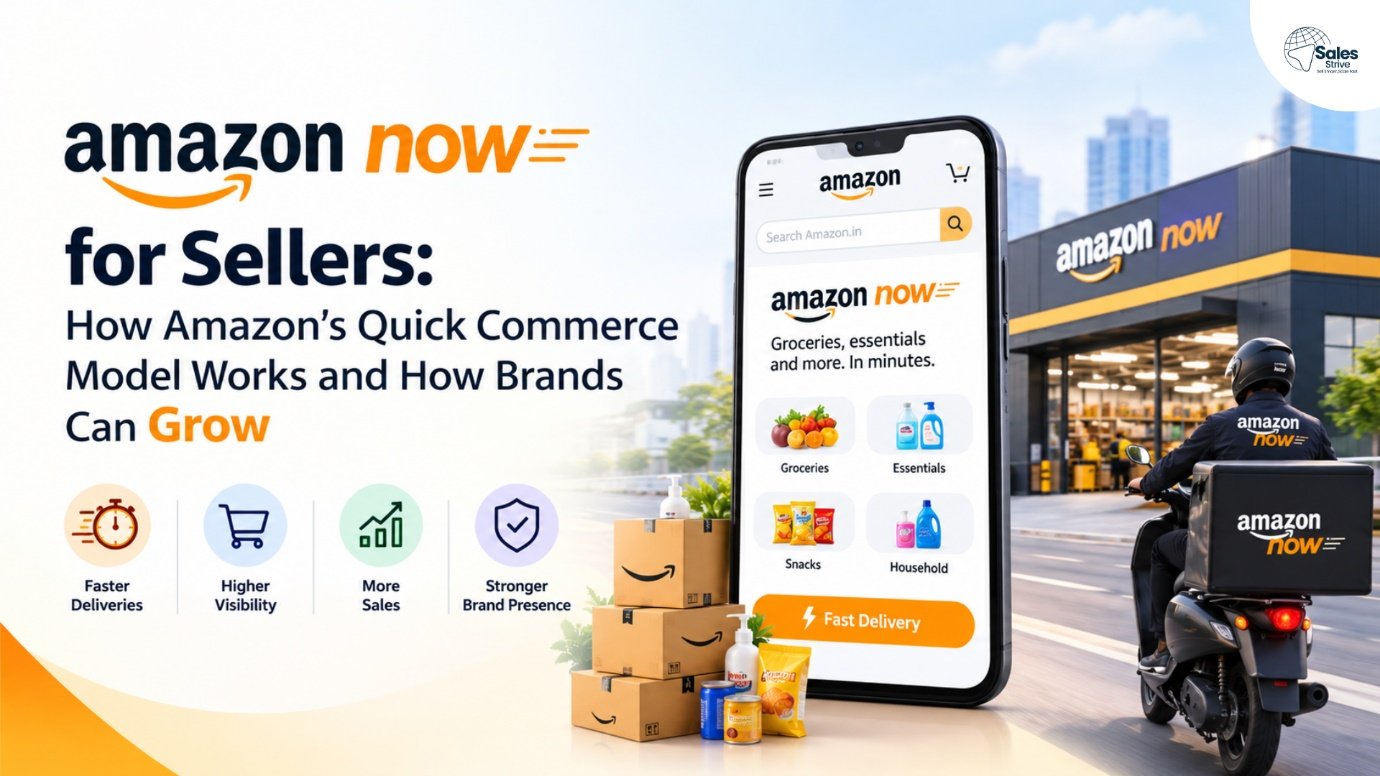
Amazon Now for Sellers: How Amazon’s Quick Commerce Model Works and How Brands Can Grow
Customers do not wish to wait days for everyday products. From groceries and personal care products to household essentials, beauty products and small appliances, shoppers increasingly expect products to reach them within minutes.
This shift has accelerated the growth of quick commerce in India, and Amazon is expanding its ultra-fast delivery network through Amazon Now.
For Amazon Now sellers, this model represents more than faster delivery. It creates an opportunity to get products closer to customers, respond to local demand and build a stronger Amazon quick commerce strategy.
But faster fulfilment alone does not guarantee sales. Product selection, availability, catalogue quality, inventory planning and marketplace visibility all matter.
What Is Amazon Now?
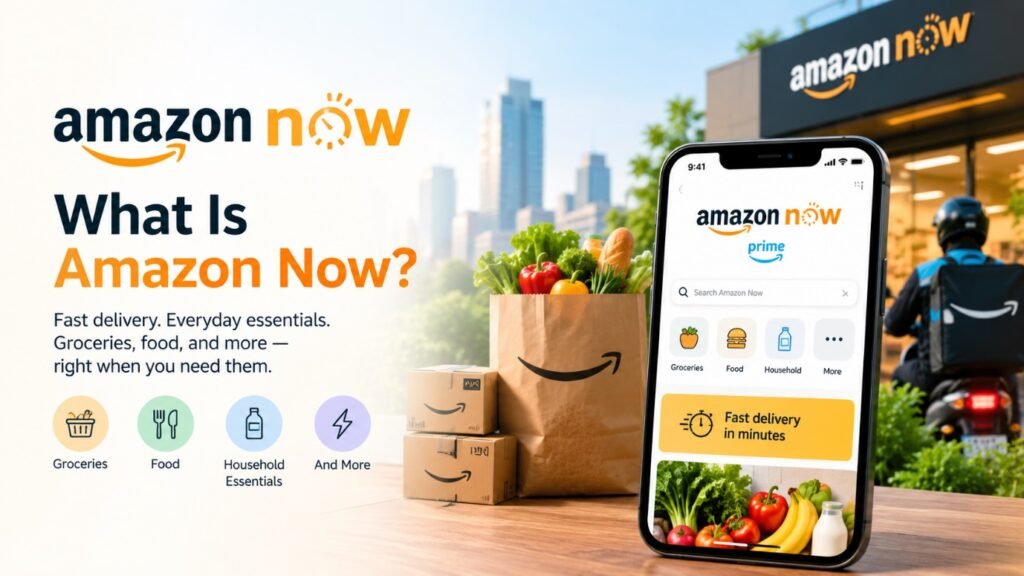
Amazon Now is Amazon’s ultra-fast delivery service designed to deliver selected products to customers within minutes.
In Amazon Now India, the model uses fulfilment locations positioned closer to the customers they serve. This proximity helps reduce delivery distances and supports faster order fulfilment.
Amazon has been rapidly expanding its ultra-fast delivery network in India, supported by micro-fulfilment and urban fulfilment centres. The assortment has also moved beyond traditional groceries into categories such as personal care, beauty, fashion, home and kitchen, and small appliances.
For sellers, this means Amazon Now quick commerce is becoming a broader marketplace opportunity rather than being limited to grocery products.
How Does Amazon Now Work?
The basic Amazon Now delivery model depends on three things: local inventory, fulfilment infrastructure and short delivery distances.
When a customer places an order, the system identifies inventory available within a nearby fulfilment location. The product is picked and packed at that location and handed over for last-mile delivery.
This is fundamentally different from a traditional ecommerce model where a product may travel from a distant warehouse to the customer’s location.
The closer the inventory is to the customer, the easier it becomes to support rapid delivery.
For brands, Amazon Now for Sellers makes inventory planning particularly important. A product that is technically available online but unavailable in the customer’s local fulfilment network may not have the same opportunity to participate in Amazon Now delivery.
This is why Amazon Now inventory management can become an important part of a seller’s quick-commerce strategy.
Why Is Amazon Now for Sellers Important?
The growth of quick commerce is changing customer expectations.
Customers who become accustomed to receiving essentials quickly may increasingly prefer marketplaces that can provide immediate availability.
For sellers, Amazon Now for sellers can create opportunities in areas such as:
- Faster product discovery
- Localised customer demand
- Higher product availability
- Convenience-driven purchases
- Repeat purchases for everyday products
- Expansion into quick-commerce categories
- Stronger marketplace visibility
- Faster access to local customers
However, sellers should not assume that every product is automatically suitable for ultra-fast delivery.
The product needs to match customer demand, fulfilment economics, inventory availability and the requirements of the relevant Amazon programme.
For brands considering Amazon Now for sellers, the key is to understand that product availability, listing quality and inventory planning work together.
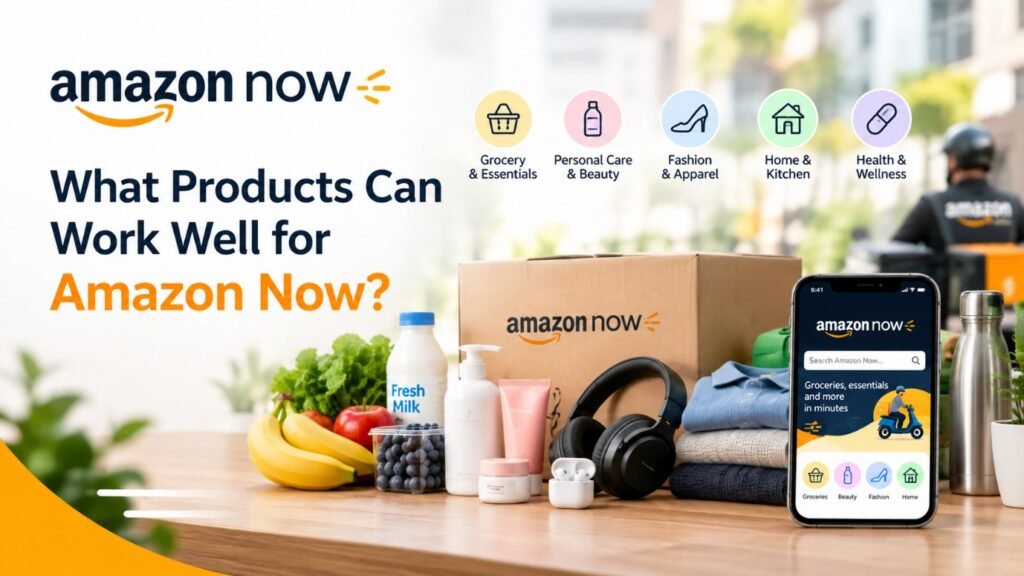
What Products Can Work Well for Amazon Now?
The strongest opportunities are generally products that solve an immediate or recurring customer need.
Depending on eligibility and availability, relevant categories can include:
- Grocery and everyday essentials
- Personal care products
- Beauty products
- Household products
- Pet products
- Baby-care products
- Small electronics and accessories
- Home and kitchen products
- Selected fashion products
- Frequently purchased consumer products
The right strategy is not simply to upload as many products as possible.
Sellers should identify products with consistent demand, suitable margins, manageable inventory requirements and strong repeat-purchase potential.
For example, a product that customers frequently need immediately may have stronger Amazon Now quick commerce potential than a product that is usually purchased after extensive research.
Brands should also analyse their catalogue before choosing products for Amazon Now for sellers.
How to Prepare for Amazon Now for Sellers
- Identify Products With Quick-Commerce Potential
Start by analysing your catalogue.
Look for products with:
- Strong existing demand
- Repeat purchases
- Competitive pricing
- Healthy contribution margins
- Low return risk
- Consistent inventory availability
- Clear customer use cases
Your best-selling Amazon products may not automatically be your best quick-commerce products.
When evaluating Amazon Now products, consider customer urgency, demand frequency, profitability and inventory availability.
- Optimise Your Product Listings
Speed brings customers to the marketplace, but the listing still has to convince them to buy.
Your product title, images, bullet points, description, keywords and other catalogue elements should clearly communicate the product’s value.
A strong listing should answer the customer’s main questions quickly:
What is the product?
Who is it for?
What problem does it solve?
Why should the customer choose it?
This is where Amazon Now listing optimization and broader Amazon listing optimization become important.
A well-optimised Amazon Now product listing can improve product discoverability and help customers understand the product before making a purchase.
- Plan Inventory Around Demand
Quick commerce depends heavily on product availability.
If a high-demand product repeatedly goes out of stock, you can lose sales opportunities and make advertising less efficient.
Sellers should monitor:
- Sales velocity
- Local demand
- Stock levels
- Replenishment cycles
- Seasonal demand
- Fast-moving SKUs
- Inventory ageing
Effective Amazon Now inventory management should therefore be connected to your overall marketplace strategy rather than treated as a separate operational task.
For brands exploring Amazon Now for sellers, inventory placement and replenishment planning are particularly important because quick-commerce customers expect immediate availability.
- Monitor Visibility and Conversion
Getting a product into a fast-delivery ecosystem does not automatically mean customers will find it.
Sellers should continue monitoring search visibility, product-page performance, conversion rate, advertising performance and competitor activity.
This is especially important when competing against established brands with stronger reviews, pricing and advertising budgets.
A strong Amazon quick commerce strategy should therefore combine product availability with marketplace SEO, listing optimization and advertising.
- Measure Profitability, Not Just Orders
More orders do not always mean more profit.
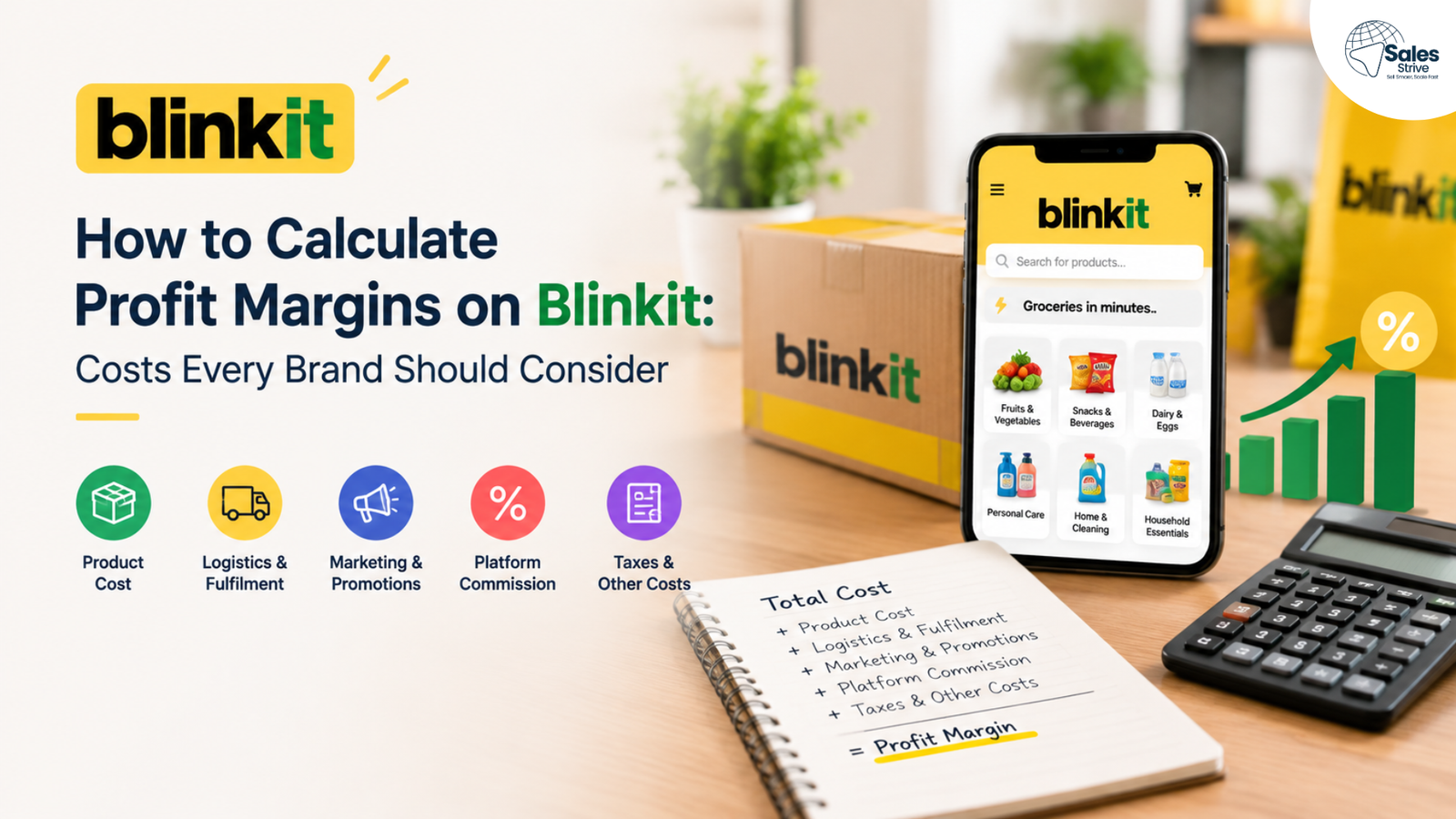
Before scaling a quick-commerce product, calculate the contribution margin after considering:
Selling Price − Product Cost − Marketplace Costs − Discounts − Advertising Costs − Fulfilment Costs
This gives you a clearer picture of whether increased sales are actually creating sustainable growth.
For Amazon Now sellers, profitability should be evaluated before aggressively scaling inventory or advertising.
Amazon Now vs Traditional Ecommerce Delivery
Traditional ecommerce is designed to provide broad selection and flexible delivery windows across a large geographic area.
Amazon Now focuses on a different customer need: immediacy.
|
Traditional Ecommerce |
Amazon Now / Quick Commerce |
|
Wider geographic reach |
Localised fulfilment |
|
Large product selection |
Curated or locally available assortment |
|
Same-day, next-day or standard delivery |
Delivery within minutes |
|
Centralised fulfilment can play a larger role |
Smaller fulfilment locations closer to customers |
|
Customers can plan purchases |
Stronger convenience and immediate-need purchases |
The two models can complement each other.
A brand does not necessarily need to choose between traditional ecommerce and quick commerce. Instead, it can develop a multi-channel marketplace strategy based on product type, customer demand and fulfilment economics.
For brands already selling on Amazon, this can create an opportunity to explore Amazon Now for brands while continuing to serve customers through traditional ecommerce.
How Sales Strive Helps Brands Grow on Marketplaces
Preparing for quick commerce requires more than simply listing products.
Brands need to continuously manage catalogue quality, marketplace SEO, inventory, advertising, performance data and overall account health.
Sales Strive provides Amazon seller account management and marketplace growth support, helping brands manage areas such as account management, catalogue optimisation, marketplace SEO, advertising and ecommerce growth strategy.
For brands exploring Amazon marketplace management, quick commerce or multi-marketplace expansion, professional account management can help bring these activities together instead of managing each function separately.
Sales Strive can support sellers with areas such as:
- Marketplace account management
- Product listing optimization
- Keyword and marketplace SEO
- Catalogue management
- Advertising support
- Inventory and performance monitoring
- Marketplace growth strategy
The goal should be simple: better visibility, stronger conversion and sustainable marketplace growth.
If you are exploring Amazon Now seller account management or need support managing your broader ecommerce marketplace presence, professional guidance can help you identify the right products, optimise your listings and build a practical growth strategy.
The Future of Amazon Now for Sellers
Amazon Now is part of a broader change in ecommerce: customers increasingly expect selection, availability and speed at the same time.
Amazon is continuing to expand its ultra-fast delivery infrastructure in India, including micro-fulfilment and urban fulfilment centres. As the network grows, more categories and locations can become relevant to the quick-commerce opportunity.
For sellers, the important question is not simply, “Can I sell on Amazon Now?”
The better question is:
“Which products in my catalogue are ready for a fast-commerce model, and how can I make them visible, available and profitable?”
Brands that combine product selection, Amazon Now listing optimization, inventory planning, marketplace SEO and performance monitoring will be better positioned to take advantage of the evolving quick-commerce market.
The opportunity is not only about Amazon Now delivery in India. It is about adapting your entire marketplace operation to a customer who increasingly values speed and convenience.
Frequently Asked Questions
Is Amazon Now available in India?
Yes. Amazon Now India is expanding rapidly across the country. Amazon currently describes a growing ultra-fast delivery network supported by micro-fulfilment and urban fulfilment infrastructure.
How does Amazon Now deliver products so quickly?
Amazon Now uses fulfilment locations positioned closer to customers. Keeping inventory closer to demand reduces delivery distance and supports faster fulfilment.
How does Amazon Now for sellers work?
Amazon Now is an evolving Amazon delivery and fulfilment ecosystem. Seller eligibility, product categories and fulfilment arrangements can vary. Sellers should check their current Amazon Seller Central account and applicable Amazon programmes rather than relying on outdated third-party onboarding information.
How can I sell products on Amazon Now?
If you are researching how to sell products on Amazon Now, first evaluate whether your products, catalogue, inventory and Amazon account are suitable for the relevant Amazon programmes.
What products are suitable for quick commerce?
Products with recurring demand, strong customer need, suitable margins, reliable inventory and relatively simple fulfilment requirements can be good candidates. Grocery, personal care, household essentials, beauty and selected consumer products are examples of categories associated with quick commerce.
How can I improve my Amazon product visibility?
Focus on relevant keyword research, strong titles, high-quality product images, clear bullet points, competitive pricing, reviews, inventory availability and data-driven advertising. Amazon listing optimization should be treated as an ongoing process rather than a one-time activity.
Do I need professional Amazon account management for quick commerce?
Not necessarily, but professional support can be useful when a brand is managing multiple products, advertising campaigns, catalogue optimisation, inventory planning and marketplace growth simultaneously. A specialised ecommerce partner can help coordinate these areas and identify opportunities for improvement.
Conclusion
Amazon Now is changing how customers shop by bringing speed, convenience and product availability together. For sellers and brands, the opportunity goes beyond faster delivery—it requires the right products, optimised listings, reliable inventory and a clear Amazon quick commerce strategy.
As Amazon Now for sellers continues to expand across India, brands that focus onproduct visibility, inventory planning, listing optimization and profitability can position themselves for sustainable marketplace growth.
If you are looking to strengthen your Amazon Now seller strategy or expand across quick-commerce platforms, Sales Strive can help you manage your marketplace operations, optimise your listings and identify opportunities for growth.
Is Your Brand Ready for the Amazon Now Opportunity?
From product selection and listing optimization to inventory planning and marketplace visibility, Sales Strive helps brands strengthen their Amazon presence and prepare for quick-commerce growth.
Your Trusted Marketplace Growth Partner
Get Your FREE Amazon Marketplace Consultation Today!
Amazon | Flipkart | Myntra | Ajio | Meesho | Blinkit | Zepto | Noon | Walmart
3 Responses