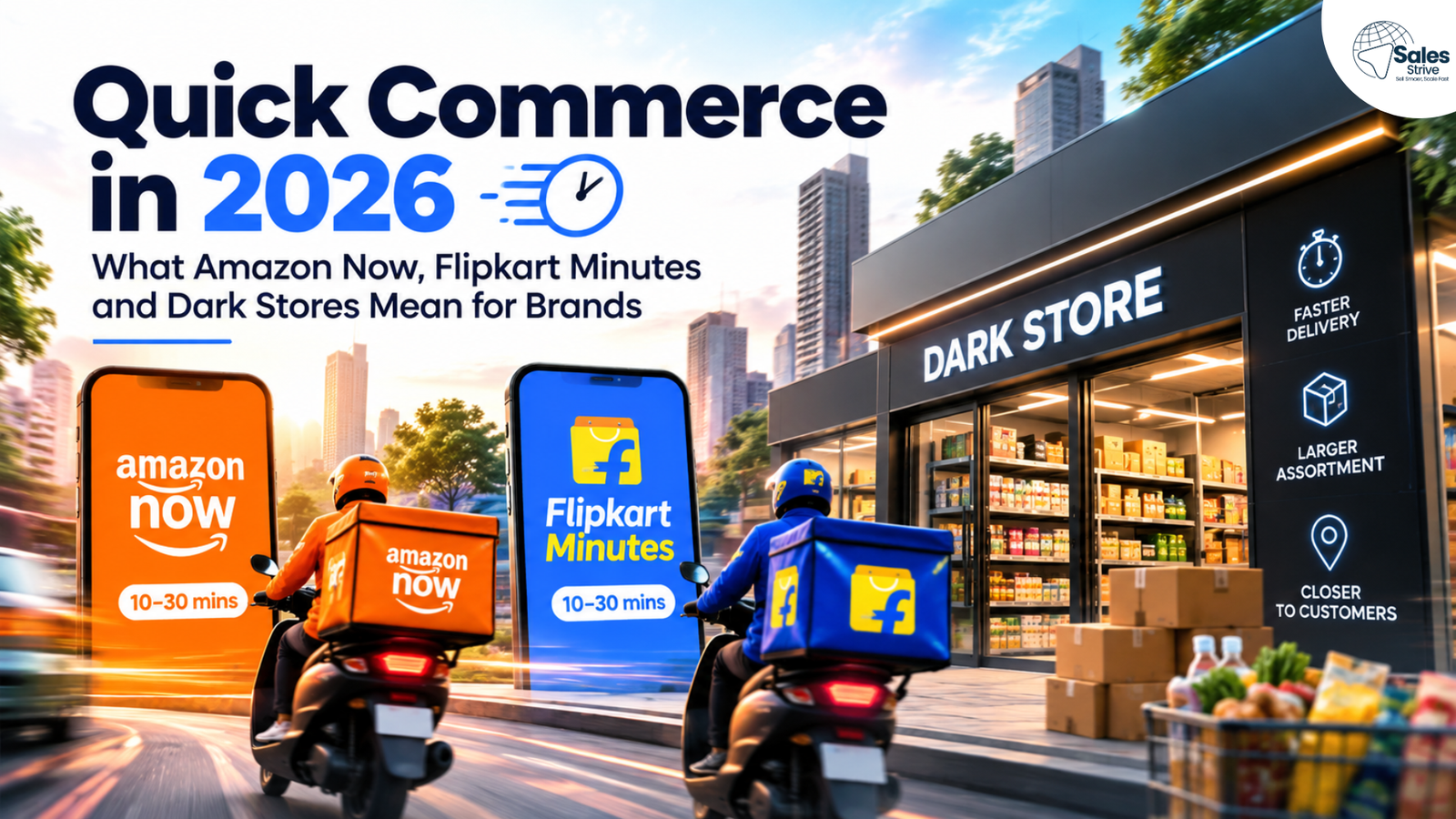
Quick commerce in India 2026 is no longer limited to groceries and 10-minute delivery. In 2026, the industry is expanding into beauty, electronics, fashion, home products, personal care and other everyday categories. At the same time, platforms are building larger and denser fulfilment networks to bring products closer to customers. For brands, this creates a new opportunity: quick commerce for brands is becoming another important route to product discovery, sales and customer acquisition.
The first phase of quick commerce in India focused mainly on delivering groceries and daily essentials within minutes. Today, the model is becoming broader.
Platforms are increasingly combining dark stores, micro fulfilment centres, urban fulfilment centres and existing retail infrastructure to serve different customer needs.
This matters for brands because customers are no longer using quick commerce platforms India only when they need milk or snacks. They are also discovering personal care products, electronics accessories, beauty products, home essentials and other categories through these platforms.
Two developments worth watching in quick commerce in 2026 are the expansion of Amazon Now and Flipkart Minutes.
Amazon is developing a multi-layer fulfilment model. Its expansion of Amazon Now India is helping the company reach customers through faster delivery networks, while larger fulfilment centres can support a wider product assortment.
Flipkart Minutes India is also expanding beyond major metropolitan areas. Its growing fulfilment network is increasing the potential reach of quick commerce in India.
For brands, this expansion means quick commerce opportunities for brands are no longer limited to a small group of metro customers.
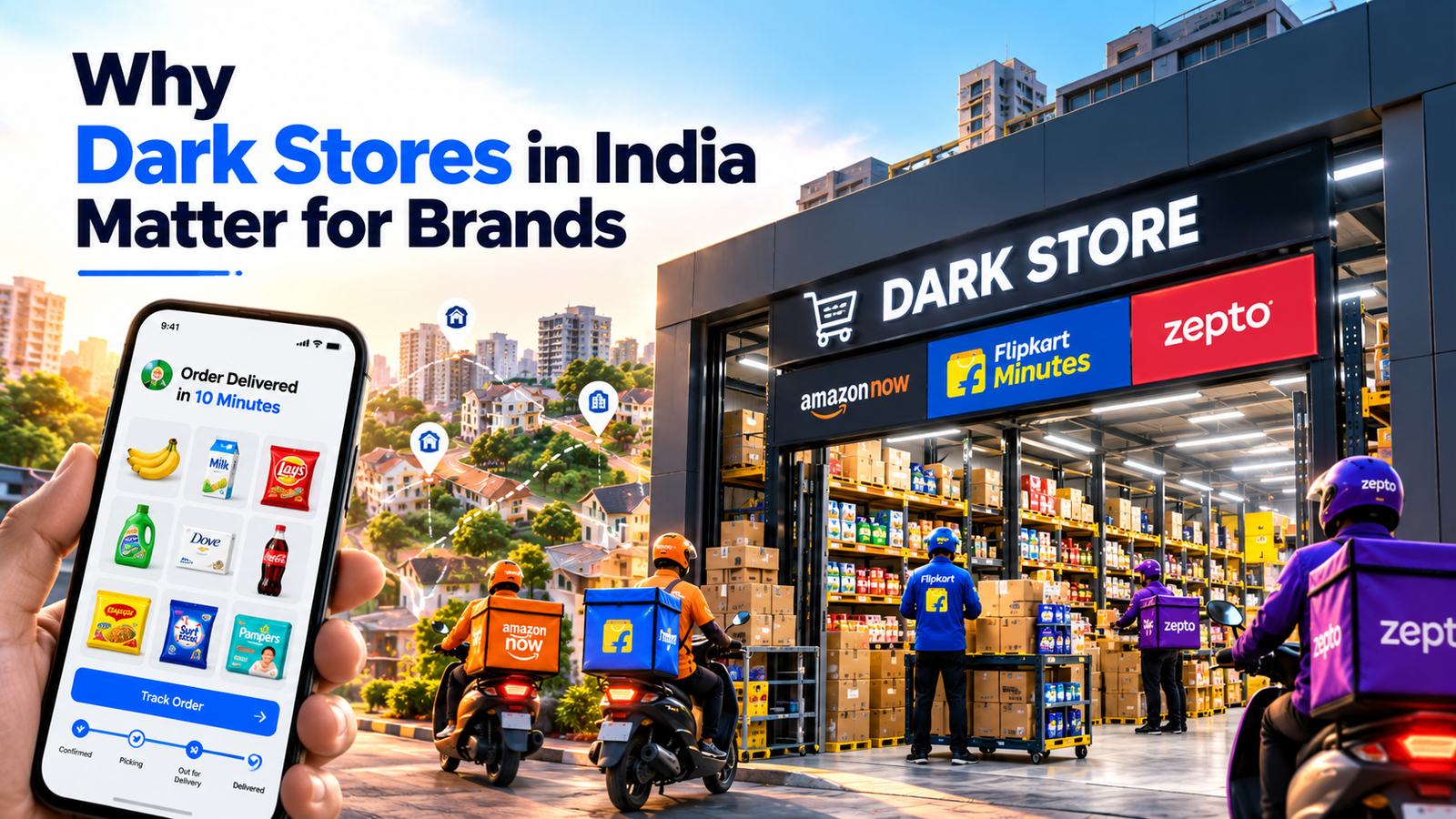
A dark store is a fulfilment location designed for online orders rather than traditional walk-in shopping. These facilities are positioned close to high-demand areas so products can be picked and dispatched quickly.
The growth of dark store quick commerce is important because inventory can be positioned closer to customers, supporting faster fulfilment and better product availability.
But dark stores in India also change how brands should think about inventory.
A traditional marketplace can support a very large catalogue. A dark store has limited physical space, so platforms need to prioritize products that are relevant to local demand and capable of moving efficiently.
That makes product assortment, inventory availability and SKU selection increasingly important for quick commerce brands.
The biggest opportunity is not simply getting listed. Brands need to make their products suitable for the quick-commerce environment.
Products that solve an immediate need or encourage repeat purchases can be a natural fit for quick commerce. Personal care, snacks, beverages, pet care, household essentials and selected electronics accessories are examples of categories that can benefit from rapid availability.
Brands do not necessarily need to upload their entire ecommerce catalogue. Instead, they can identify products based on demand, price point, size, repeat purchase potential and local customer preferences.
This approach can help brands build a focused quick commerce product selection strategy.
Being available on a platform does not automatically guarantee discovery. Product titles, images, descriptions, category placement, promotions and in-app visibility can influence how customers find products.
For this reason, quick commerce listing optimization should be treated as an ongoing activity rather than a one-time task.
Stock-outs can directly affect customer experience and sales opportunities. Brands entering quick commerce in India need a clear replenishment process and should monitor inventory availability across locations.
A product that performs well in one city may not perform at the same level elsewhere. Quick commerce brands can use local demand patterns to understand which products and SKUs should receive greater focus.
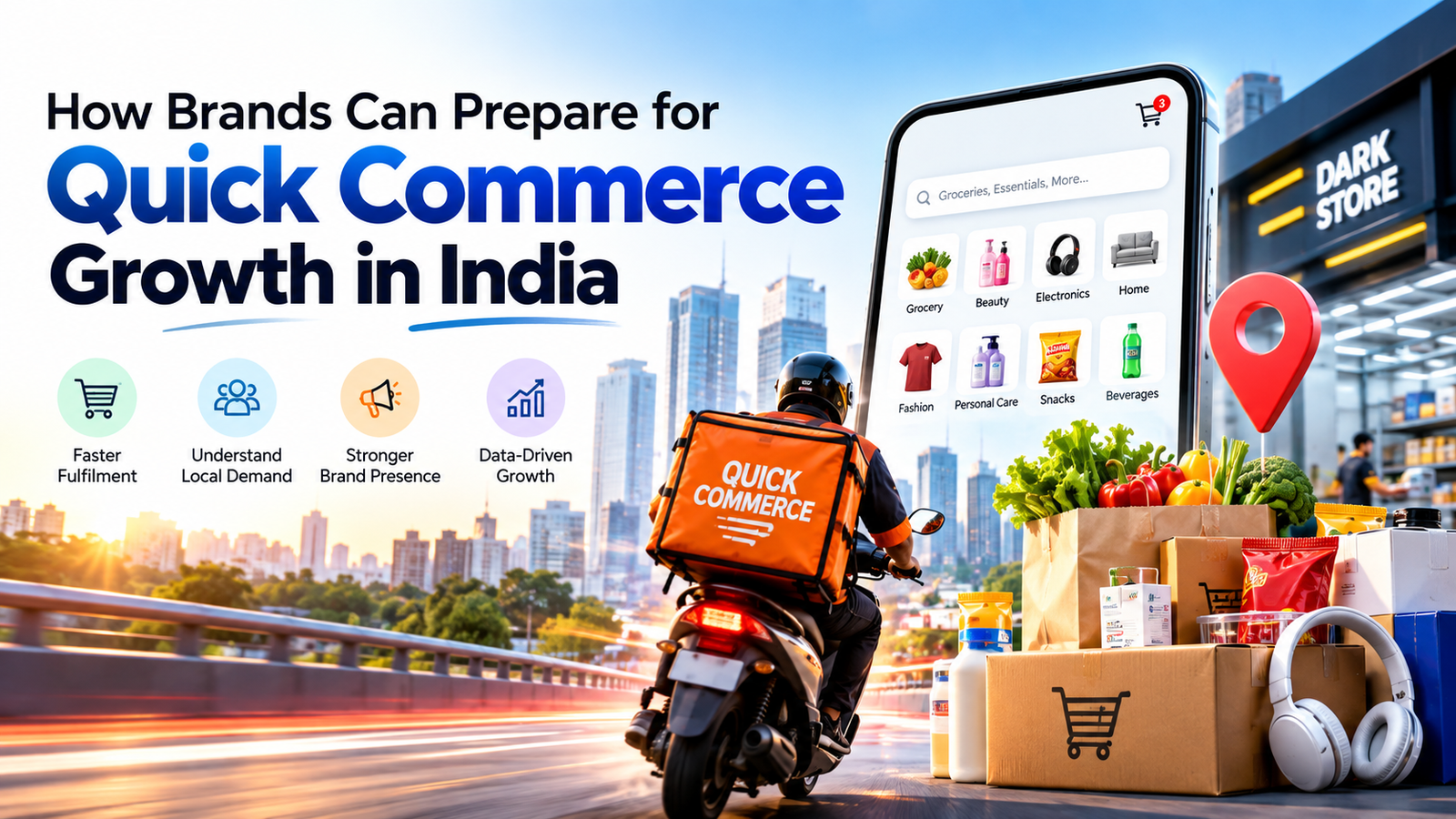
The next stage of quick commerce India 2026 is likely to involve more categories, more fulfilment locations and more competition for customer attention.
For brands, the key is to treat quick commerce as more than another sales channel. It requires a combination of product selection, catalogue management, visibility, advertising, inventory planning and performance tracking.
This is where structured quick commerce marketplace management can make a difference.
Sales Strive helps brands manage their ecommerce and quick commerce strategy for D2C brands with support across marketplace operations, product listings, visibility, advertising and account management.
Whether your brand is exploring Amazon, Flipkart, Meesho or quick commerce platforms such as Blinkit, Zepto and Instamart, the right strategy can help you build a stronger digital presence.
Quick commerce in India 2026 is evolving from a race for faster grocery delivery into a broader retail and fulfilment ecosystem. Amazon Now and Flipkart Minutes are expanding their networks, while dark stores and other fulfilment formats are helping platforms serve customers across more locations.
For brands, this means the opportunity is expanding—but so is the need for better execution. Product selection, inventory availability, listing quality and product visibility will become increasingly important as more brands enter quick commerce.
If your brand is planning to enter or expand on quick commerce platforms, Sales Strive can help you build and manage the right marketplace strategy.
Book a Free Consultation with Sales Strive and explore the right quick-commerce growth approach for your brand.
Quick commerce in India is a retail model focused on delivering products rapidly through nearby fulfilment locations such as dark stores and micro-fulfilment centres. In 2026, the model is expanding beyond groceries into multiple consumer categories.
Amazon Now is Amazon's rapid-delivery offering in India, designed to provide selected products through faster fulfilment networks and reach customers through quick-commerce infrastructure.
Flipkart Minutes is Flipkart's quick-commerce service. It has been expanding its micro-fulfilment network across Indian cities and pincodes.
Dark stores place inventory closer to customers and allow platforms to process online orders quickly. Their location and inventory selection are important for delivery speed and product availability.
Brands can focus on accurate product listings, relevant keywords, strong product images, competitive pricing, inventory availability, promotions and platform-specific quick commerce listing optimization strategies.
From product selection and listing optimization to inventory and product visibility, SalesStrive helps brands build a stronger presence across India’s growing quick-commerce platforms.
Your Trusted Marketplace Growth Partner
Amazon | Flipkart | Myntra | Ajio | Meesho | Blinkit | Zepto | Noon | Walmart
 hello@salesstrive.in