
How to Start Selling on Etsy: Complete Etsy Seller Guide for Beginners
Introduction
The rise of ecommerce has created exciting opportunities for creators, artists, crafters, and small businesses to reach customers worldwide. If you’re wondering how to start selling on Etsy, you’re not alone. Etsy has become one of the world’s leading marketplaces for handmade products, vintage items, craft supplies, and digital downloads.
Whether you’re looking to launch a side business, monetize your creativity, or build a full-time brand, Etsy provides a simple and accessible platform to get started. With millions of active buyers searching for unique and personalized products every day, becoming an Etsy seller can be a profitable opportunity for entrepreneurs of all experience levels.
In this complete Etsy seller guide, you’ll learn everything you need to know about Etsy seller registration, Etsy shop setup, product listing optimization, seller fees, and proven strategies to grow your sales successfully.
What Is Etsy and Why Should You Sell on Etsy?
Etsy is a global online marketplace that specializes in unique, handmade, vintage, and creative products. Unlike traditional ecommerce marketplaces that focus on mass-produced goods, Etsy connects buyers with independent creators and small businesses.
Popular product categories on Etsy include:
- Handmade jewelry and accessories
- Personalized gifts
- Home décor and artwork
- Wedding products
- Craft supplies
- Vintage collectibles
- Printable planners
- Digital downloads
One of the biggest advantages of becoming an Etsy marketplace seller is access to a large customer base that actively searches for unique products. Instead of investing heavily in building traffic to a standalone website, Etsy helps sellers gain visibility through its marketplace search engine and global audience.
For beginners, Etsy offers a low-risk and beginner-friendly way to start an ecommerce business without advanced technical skills.
Why Etsy Is Ideal for Beginners
Many entrepreneurs choose Etsy because of its ease of use and seller-friendly setup process.
Benefits of starting an Etsy shop include:
- Simple shop creation process
- Global customer reach
- Built-in marketplace traffic
- Secure payment processing
- Low startup costs
- Mobile-friendly seller tools
- Strong support for handmade and creative products
Whether you’re an artist, designer, crafter, or digital creator, Etsy provides an excellent platform to showcase and sell your products online.
Etsy Seller Requirements: What You Need Before Starting
Before beginning your Etsy seller onboarding process, make sure you have the following essentials ready:
Valid Email Address
You’ll need a valid email address to create and manage your Etsy seller account.
Government-Issued Identification
Etsy requires identity verification to maintain marketplace security and compliance.
Bank Account Information
A bank account is necessary to receive payouts from Etsy sales.
Payment Method
You’ll need a debit or credit card for Etsy fees and billing purposes.
Product Inventory
Prepare the products you plan to sell and determine your inventory management strategy.
High-Quality Product Images
Professional product photos significantly impact visibility and conversion rates.
Brand Identity
Develop a unique brand identity, including your shop name, logo, product style, and target audience.
Preparing these elements in advance can make your Etsy seller registration process much smoother.
How to Start Selling on Etsy: Step-by-Step Etsy Shop Setup Process
Step 1: Create an Etsy Seller Account
The first step is creating your Etsy seller account.
Visit Etsy and register using your email address. After registration, verify your email to activate your account.
This account serves as the foundation for your future Etsy business.
Step 2: Open Your Etsy Shop
Once your account is active, Etsy will guide you through the Etsy shop creation process.
You’ll need to select:
- Shop language
- Country location
- Preferred currency
These settings determine how your products appear to customers worldwide.
This stage marks the beginning of your official Etsy shop setup journey.
Step 3: Choose a Unique Etsy Shop Name
Your shop name plays a major role in branding and customer recognition.
When choosing a shop name:
- Keep it memorable
- Make it easy to spell
- Reflect your products or brand identity
- Avoid complicated words
Consistency across Etsy and social media platforms helps strengthen brand awareness.
Step 4: Complete Etsy Seller Registration
Next, provide the required business and personal information.
This may include:
- Full name
- Address details
- Tax information
- Business information (if applicable)
Completing accurate information helps ensure a smooth onboarding experience.
Step 5: Set Up Etsy Payments
To receive customer payments, you’ll need to enroll in Etsy Payments.
This allows buyers to pay using various methods, including:
- Credit cards
- Debit cards
- Digital wallets
- Regional payment options
Etsy then transfers your earnings directly to your connected bank account.
Step 6: Complete Etsy Seller Onboarding Verification
As part of Etsy seller onboarding, Etsy may request:
- Identity verification
- Government ID validation
- Security checks
Once approved, your shop will be ready to publish products and start selling.
How to List Products on Etsy Successfully
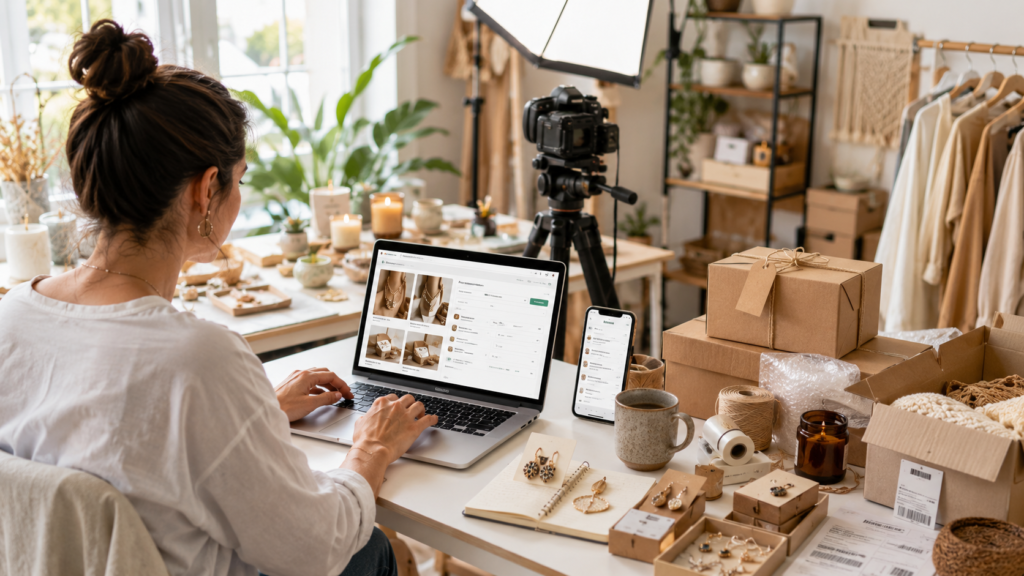
Creating optimized product listings is essential for attracting customers and increasing sales.
Write Keyword-Rich Product Titles
Product titles should clearly describe the item while including relevant search terms.
Instead of:
“Handmade Mug”
Use:
“Personalized Handmade Ceramic Coffee Mug Gift for Coffee Lovers”
This improves visibility for customers searching on Etsy.
Create Detailed Product Descriptions
A strong description should include:
- Product features
- Materials used
- Dimensions
- Usage instructions
- Personalization options
Detailed descriptions help customers make informed purchasing decisions.
Upload High-Quality Product Photos
Images are often the first thing buyers notice.
Best practices include:
- Multiple product angles
- Lifestyle photos
- Clear lighting
- High-resolution images
- Close-up details
Professional photography increases trust and conversion rates.
Use Categories, Attributes, and Tags
Selecting accurate categories and tags helps Etsy understand and rank your listings.
Use keywords that match customer search behavior to improve discoverability.
Best Products to Sell on Etsy
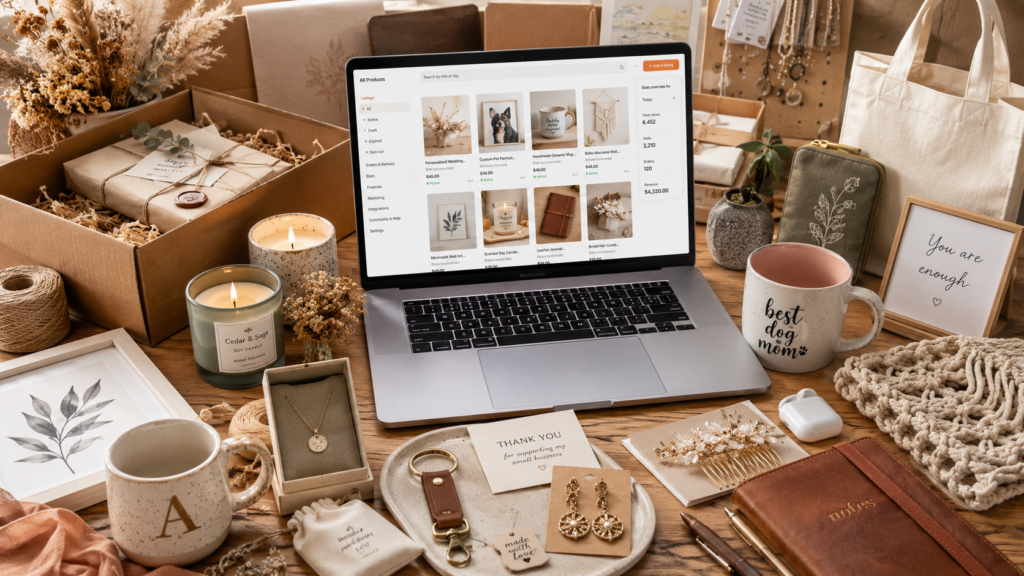
Some product categories consistently perform well on Etsy.
Handmade Products
Handmade jewelry, candles, soaps, clothing, and accessories remain highly popular.
Personalized Gifts
Customized products often achieve strong sales due to their uniqueness.
Digital Downloads
Printable planners, templates, invitations, and artwork offer scalable income opportunities.
Home Décor
Wall art, decorative items, and home accessories continue to attract buyers.
Craft Supplies
Many Etsy users purchase materials for their own creative projects.
Vintage Products
Items that meet Etsy’s vintage requirements can attract collectors and niche buyers.
Understanding Etsy Seller Fees
Before you sell on Etsy, it’s important to understand the platform’s fee structure.
Common Etsy fees include:
Listing Fees
Charged when publishing product listings.
Transaction Fees
Applied when a product sells.
Payment Processing Fees
Collected for processing customer payments.
Advertising Fees
Optional fees for Etsy Ads and promotional campaigns.
Understanding these costs helps you create a sustainable pricing strategy.
Etsy SEO Tips to Increase Product Visibility
Etsy SEO is critical for long-term success.
Research Relevant Keywords
Identify keywords buyers commonly search for.
Examples include:
- How to sell on Etsy
- Handmade gifts
- Personalized jewelry
- Digital planner downloads
Optimize Titles and Tags
Use important keywords naturally throughout listings.
Improve Product Descriptions
Descriptions should provide valuable information while incorporating relevant search terms.
Focus on Customer Experience
Positive reviews, fast shipping, and excellent service contribute to better marketplace performance.
How to Get Your First Sale on Etsy
Getting your first sale often requires patience and consistency.
Promote Your Shop on Social Media
Share products on:
- TikTok
Social traffic can help generate early sales.
Encourage Customer Reviews
Positive reviews build trust and improve conversion rates.
Offer Competitive Shipping
Affordable and transparent shipping options can increase purchase confidence.
Add More Listings
The more quality listings you create, the greater your opportunity to appear in Etsy search results.
Common Etsy Seller Mistakes to Avoid
Many new sellers struggle because of avoidable mistakes.
Common issues include:
- Low-quality photos
- Poor Etsy SEO
- Incomplete descriptions
- Underpricing products
- Slow order fulfillment
- Ignoring customer messages
- Violating Etsy marketplace policies
Avoiding these mistakes can significantly improve shop performance.
Advanced Etsy Growth Strategies
Once your shop gains traction, focus on scaling.
Build a Strong Brand
Create consistent branding across:
- Shop banner
- Product packaging
- Social media
- Customer communication
Expand Product Lines
Adding complementary products can increase average order value.
Use Etsy Advertising
Strategic ad campaigns can boost product visibility.
Improve Customer Retention
Encourage repeat purchases through excellent service and quality products.
Analyze Shop Performance
Review analytics regularly to identify opportunities for growth and optimization.
Frequently Asked Questions
How much does it cost to start selling on Etsy?
Etsy charges listing fees, transaction fees, and payment processing fees. Costs vary depending on your sales volume and business model.
Can beginners sell on Etsy?
Yes. Etsy is widely regarded as one of the most beginner-friendly ecommerce marketplaces.
What products sell best on Etsy?
Handmade goods, personalized gifts, digital downloads, home décor products, and craft supplies are among the top-performing categories.
How long does it take to get sales on Etsy?
Results vary depending on product demand, competition, SEO optimization, and marketing efforts.
Can I sell internationally on Etsy?
Yes. Etsy allows sellers to reach customers across multiple countries through its global marketplace.
Do I need a business license to sell on Etsy?
Requirements vary by country and local regulations. Always verify local legal and tax obligations before starting.
Conclusion
Learning how to start selling on Etsy is one of the best ways to transform creativity into a profitable online business. With the right Etsy shop setup, strong product listings, effective Etsy SEO, and excellent customer service, you can build a successful and sustainable ecommerce brand.
Whether you’re selling handmade products, personalized gifts, digital downloads, or vintage items, Etsy provides access to a global audience actively searching for unique products. If you need professional support with Etsy seller onboarding, Etsy shop setup, product listing optimization, marketplace management, and ecommerce growth strategies, Sales Strive can help. Our ecommerce experts assist brands and entrepreneurs in launching, managing, and scaling successful marketplace businesses.
 hello@salesstrive.in