
Expanding Beyond Borders: A New Growth Opportunity for Amazon Sellers
Introduction
The ecommerce landscape is no longer limited by geography. As consumer demand continues to grow across international markets, businesses are looking beyond their domestic audience to unlock new revenue opportunities. At the center of this shift is Amazon’s global expansion strategy, which is creating unprecedented opportunities for third-party sellers worldwide.
Through its extensive network of international marketplaces, logistics infrastructure, and seller support programs, Amazon has made it easier than ever for businesses to sell products across borders. For brands aiming to scale, understanding how Amazon’s global growth impacts third-party sellers is essential for long-term success.
In this blog, we’ll explore how Amazon’s expansion strategy is reshaping global ecommerce and what it means for sellers looking to grow internationally.
Understanding Amazon’s Global Expansion Strategy
Amazon has steadily expanded its presence across multiple regions, including North America, Europe, the Middle East, Asia-Pacific, and emerging markets. The company’s goal is simple: connect customers with a wider range of products while helping sellers reach global audiences.
Through Amazon Global Selling, businesses can list products in multiple international marketplaces without establishing a physical presence in every country. Combined with Amazon’s fulfillment and logistics capabilities, this creates a streamlined pathway for cross-border ecommerce growth.
The strategy focuses on:
- Expanding marketplace availability
- Strengthening global logistics networks
- Improving delivery speed
- Enhancing customer experience
- Supporting international sellers with localized tools
For third-party sellers, this translates into access to millions of potential customers worldwide.
Why Amazon’s Global Growth Matters for Third-Party Sellers

Access to International Customers
One of the biggest advantages of Amazon’s global expansion is the ability to reach consumers beyond local markets. Instead of relying solely on domestic demand, sellers can tap into high-growth regions and diversify their customer base.
This broader reach helps businesses generate additional revenue streams and reduce dependency on seasonal or regional market fluctuations.
Increased Brand Visibility
Selling internationally allows brands to build recognition across multiple countries. Products that perform well in one marketplace often have the potential to succeed in others when properly localized and marketed.
For private-label brands, global exposure can accelerate brand growth and strengthen long-term market positioning.
Faster Market Entry
Traditionally, international expansion required significant investments in infrastructure, warehousing, and distribution. Amazon simplifies this process by providing a ready-made ecosystem that supports sellers entering new markets.
With the right strategy, businesses can launch products internationally much faster than through traditional retail channels.
How Amazon Supports Global Sellers
Fulfillment by Amazon (FBA)
Amazon’s FBA program plays a critical role in international selling. Sellers can store inventory in Amazon fulfillment centers, while Amazon manages picking, packing, shipping, and customer service.
This allows businesses to provide faster delivery experiences and gain access to Prime customers in various regions.
Global Logistics Solutions
Managing international shipping can be complex. Amazon helps simplify logistics by offering solutions that support inventory movement, customs processes, and delivery management.
These services reduce operational challenges and help sellers focus on business growth.
Localization Tools
Customer preferences differ across countries. Amazon provides tools that help sellers adapt product listings, currencies, and language requirements for local markets.
Effective localization improves product discoverability and increases conversion rates.
Challenges Sellers Should Prepare For
While global expansion offers significant opportunities, success requires careful planning.
Regulatory Compliance
Different countries have unique regulations regarding product safety, labeling, taxes, and import requirements. Sellers must ensure compliance to avoid delays or account issues.
Competitive Marketplaces
Many international Amazon marketplaces are highly competitive. Businesses need optimized listings, competitive pricing, and strong advertising strategies to stand out.
Inventory Management
Balancing inventory across multiple regions can be challenging. Overstocking increases costs, while stock shortages can impact sales performance and rankings.
Cultural Differences
Consumer behavior varies significantly between countries. Marketing strategies that work in one region may not perform similarly elsewhere.
Understanding local shopping preferences is crucial for success.
Best Practices for International Amazon Growth
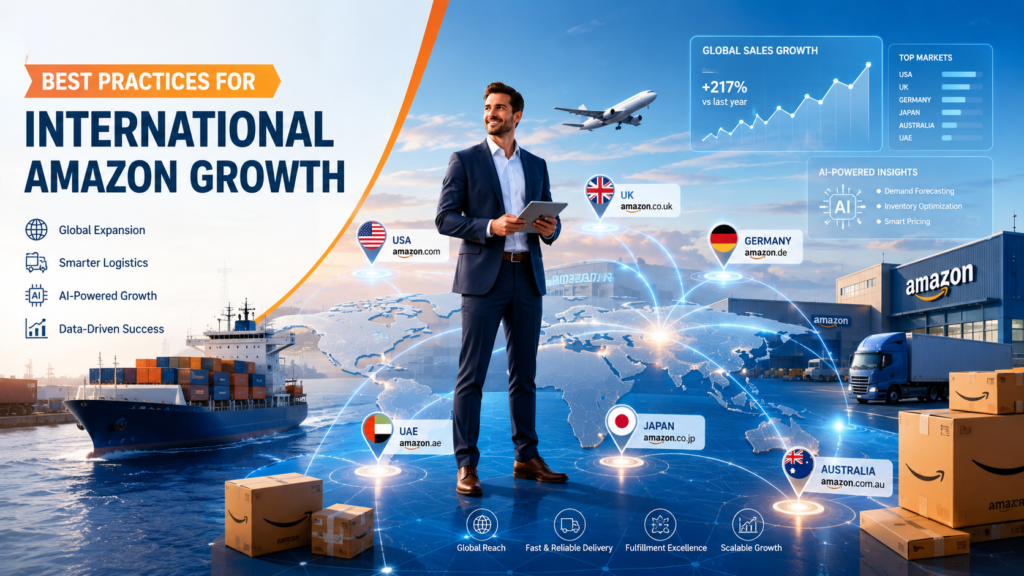
Research Demand Before Expanding
Analyze product demand, competition levels, and customer trends before entering a new marketplace. Data-driven decisions help reduce risk and improve profitability.
Optimize Listings for Local Search
International SEO is essential. Product titles, descriptions, and backend keywords should align with local search behavior to improve visibility.
Leverage Amazon Advertising
Sponsored Products, Sponsored Brands, and Sponsored Display campaigns can help increase visibility and accelerate growth in new markets.
Monitor Performance Metrics
Regularly track key metrics such as:
- Conversion rates
- Advertising performance
- Inventory health
- Customer reviews
- Buy Box percentage
Consistent optimization supports sustainable growth.
The Future of Global Ecommerce Through Amazon
Amazon continues investing in advanced technologies, automation, artificial intelligence, and logistics innovation. These improvements are expected to make international selling even more accessible for businesses of all sizes.
Emerging ecommerce markets across the Middle East, Southeast Asia, and Latin America present exciting growth opportunities for sellers willing to expand early.
Businesses that embrace global selling today are better positioned to capture future demand and build resilient ecommerce operations.
How SalesStrive Helps Amazon Sellers Expand Globally
International expansion requires more than simply listing products in new marketplaces. Success depends on strategic planning, marketplace expertise, and ongoing optimization.
At SalesStrive, we help brands unlock global growth through:
- Amazon Global Selling setup
- International marketplace onboarding
- Product listing optimization
- Keyword research and SEO
- Amazon PPC management
- Account health monitoring
- Inventory planning support
- Marketplace expansion strategy
Our team works closely with businesses to simplify cross-border selling and maximize international revenue opportunities.
Conclusion
Amazon’s global expansion strategy is opening new doors for third-party sellers seeking sustainable growth. With access to international customers, advanced logistics support, and powerful selling tools, businesses can scale beyond their domestic markets more efficiently than ever before.
However, successful global expansion requires a clear strategy, localized optimization, and ongoing marketplace management. Sellers who invest in these areas can build stronger brands, diversify revenue streams, and achieve long-term ecommerce success.
Partnering with experienced ecommerce professionals like SalesStrive can help businesses navigate the complexities of international selling and unlock the full potential of Amazon’s global marketplace ecosystem.
Frequently Asked Questions
1. What is Amazon Global Selling?
Amazon Global Selling is a program that enables businesses to sell products across multiple Amazon international marketplaces from a centralized seller account.
2. Which countries can I sell to through Amazon?
Sellers can access various Amazon marketplaces across North America, Europe, Asia-Pacific, and the Middle East, depending on eligibility and product requirements.
3. Is FBA available for international selling?
Yes. Amazon FBA supports international fulfillment, allowing sellers to store inventory in Amazon warehouses and offer fast delivery to customers.
4. What are the biggest challenges of global Amazon expansion?
Common challenges include regulatory compliance, competition, localization, inventory management, and international logistics.
5. How important is localization for international marketplaces?
Localization is critical because customer preferences, search behavior, and purchasing decisions vary across different regions.
6. How can SalesStrive help with Amazon global expansion?
SalesStrive provides end-to-end Amazon marketplace management, international SEO, advertising support, listing optimization, and expansion strategies to help brands grow globally.