
Amazon Now Seller Strategy: How to Build a Winning Quick Commerce Business
Quick commerce is changing the way Indian consumers shop. Customers are no longer willing to wait several days for everyday products when they can receive essentials within minutes. This shift is creating a new opportunity for brands that can combine product availability, competitive pricing, strong listings, and fast fulfilment.
Amazon is strengthening its position in this market through Amazon Now, its quick-commerce offering in India. In April 2026, Amazon said Amazon Now had already expanded to more than 300 micro-fulfilment centres and that it planned to more than double its footprint. In June 2026, Amazon announced plans for more than 100 Urban Fulfillment Centers, designed to bring a much wider assortment to customers while maintaining fast delivery.
For sellers, this means Amazon Now should not be treated simply as another sales channel. It requires a focused Amazon Now seller strategy built around local demand, inventory availability, product discoverability, and operational efficiency.
What Makes Amazon Now Different for Sellers?
Traditional ecommerce gives customers time to compare products, read detailed information, and plan purchases. Quick commerce is different. Customers often search because they have an immediate requirement.
That changes what matters.
A product can have an excellent listing but still lose sales if it is unavailable at the relevant fulfilment location. Similarly, a highly competitive price may not be enough if customers cannot quickly understand the product or find it in search results.
A successful Amazon Now selling strategy therefore needs to connect three areas:
-
- Visibility – Can customers discover the product?
-
- Availability – Is the product in stock where demand exists?
-
- Conversion – Can customers make a quick purchase decision?
Choose Products With Strong Quick-Commerce Potential
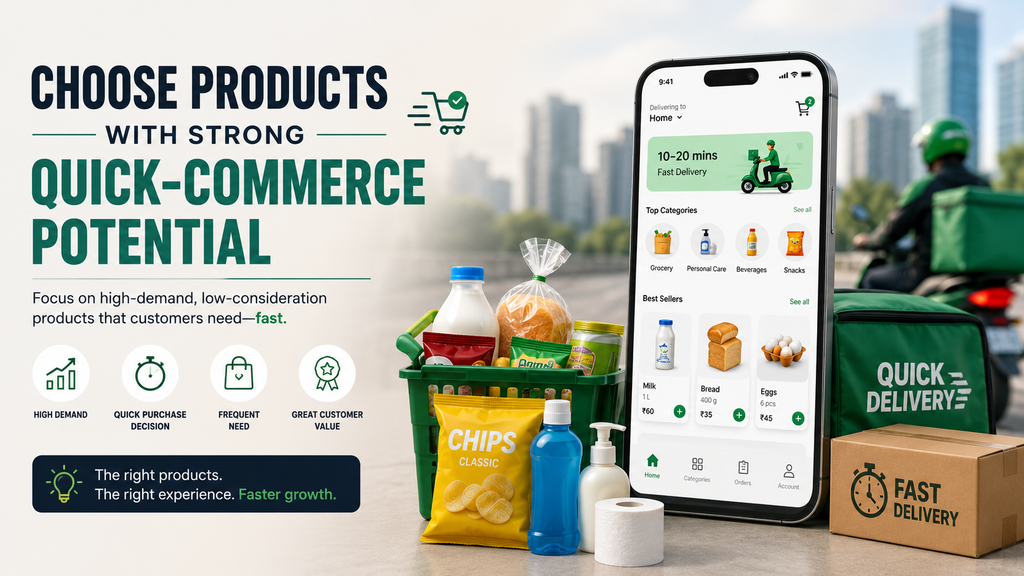
Not every product is equally suited to quick commerce. Sellers should begin by identifying products that solve an immediate or recurring customer need.
Everyday essentials, personal care, packaged foods, household products, accessories, small appliances and other frequently purchased categories can be strong candidates. Amazon is also expanding Amazon Now beyond traditional grocery categories, with Urban Fulfillment Centers planned to carry products including electronics, apparel, footwear, jewellery, luggage, watches, furniture and other categories.
Instead of pushing an entire catalogue at once, brands can start with products that have consistent demand, manageable inventory requirements, competitive pricing and repeat-purchase potential.
Optimize Your Amazon Now Product Listings
In quick commerce, customers often make decisions faster. This makes product content extremely important.
Your Amazon Now product listing optimization should focus on:
-
- Clear and relevant product titles
-
- High-quality product images
-
- Important product benefits above the fold
-
- Accurate specifications and variations
-
- Relevant search terms
-
- Competitive pricing
-
- Complete product attributes
Avoid unnecessary information that makes the customer work harder to understand the product. A strong listing should answer the customer’s basic questions quickly: What is it? Why do I need it? What size or variant is available? And is the price worth it?
Treat Inventory as a Growth Strategy
Inventory management is one of the biggest factors behind quick-commerce performance.
Amazon’s expanding fulfilment infrastructure is designed to position inventory closer to customers. For sellers, this makes stock planning even more important because demand can vary by location, category, time of day and season. Amazon says its network uses AI-driven inventory planning and demand forecasting to support faster fulfilment.
Brands should monitor:
-
- Fast-moving SKUs
-
- Location-level demand
-
- Stock cover
-
- Replenishment cycles
-
- Seasonal demand
-
- Out-of-stock frequency
Advertising a product that repeatedly goes out of stock can waste both marketing spend and potential sales.
Build a Pricing and Promotion Strategy

Quick-commerce customers are highly convenience-driven, but price still influences the final decision. Sellers should monitor competitor pricing, promotional offers and customer demand before setting their strategy.
Rather than permanently discounting products, brands can test limited-time offers, value packs, bundles and seasonal promotions where appropriate.
The objective should be profitable growth—not simply generating a higher order count.
Improve Product Visibility
As more brands enter quick commerce, competition for customer attention becomes stronger. Amazon Now is also entering a market where Blinkit, Zepto, Swiggy Instamart and Flipkart Minutes have already built significant customer awareness.
Zerodha’s analysis highlights how quick commerce has expanded beyond groceries into a broader ecommerce proposition, increasing the competitive pressure on established ecommerce players as well.
For sellers, this means Amazon Now SEO, product discoverability and advertising should work together.
Use relevant keywords naturally in product content, maintain accurate attributes, improve images and monitor performance data. Paid visibility can support launches, but organic relevance and product quality remain important foundations.
Connect Marketing With Operations
One of the most common mistakes brands can make is treating marketing and inventory as separate functions.
Suppose a product receives strong advertising exposure but has limited inventory. The campaign may generate traffic without generating sustainable sales. On the other hand, keeping sufficient inventory without visibility can also limit growth.
A stronger Amazon Now seller strategy connects advertising, demand forecasting, inventory planning and catalogue management.
This approach helps brands make decisions based on actual business performance rather than assumptions.
Measure the Right Performance Indicators
Sellers should regularly evaluate more than revenue.
Important metrics can include:
-
- Product impressions
-
- Search visibility
-
- Click-through rate
-
- Conversion rate
-
- Sales by SKU
-
- Advertising performance
-
- Inventory availability
-
- Repeat purchases
-
- Return or cancellation trends
Tracking these indicators helps identify whether the real problem is visibility, pricing, listing quality, inventory or conversion.
How Sales Strive Can Help With Amazon Now Growth
Entering quick commerce requires more than simply listing products. Brands need a coordinated approach covering seller account management, product listing, catalogue optimization, inventory coordination, advertising and marketplace growth.
Sales Strive helps brands strengthen their ecommerce operations and prepare for opportunities across Amazon, Flipkart and emerging quick-commerce platforms.
If you are planning to expand into Amazon Now, professional support can help you build a more structured seller strategy while reducing operational gaps.
FAQs
1. What is Amazon Now?
Amazon Now is Amazon’s quick-commerce offering in India, designed to provide faster delivery of products through a localized fulfilment network. Amazon is expanding the service across more cities and product categories.
2. How can brands sell on Amazon Now?
Brands need to meet Amazon’s applicable seller, product, category and fulfilment requirements. Eligibility and onboarding requirements can vary depending on the product category and Amazon’s current program structure.
3. What products are suitable for Amazon Now?
Products with strong demand, frequent purchases, suitable margins and manageable fulfilment requirements can be good candidates. Amazon is also expanding Amazon Now into categories beyond groceries.
4. Why is inventory important for Amazon Now sellers?
Quick-commerce customers expect immediate availability. Poor inventory planning can result in stockouts, lost sales and reduced campaign effectiveness.
5. How can sellers improve Amazon Now product visibility?
Sellers should focus on relevant product keywords, accurate catalogue information, high-quality images, competitive pricing, strong product content and appropriate advertising.
6. Can Sales Strive help with Amazon Now?
Yes. Sales Strive provides ecommerce and marketplace support covering seller account management, product listing, catalogue optimization, advertising and marketplace growth, helping brands build a stronger foundation for quick-commerce expansion.
Conclusion
The growth of Amazon Now quick commerce in India signals a broader change in online retail. Customers increasingly expect speed without sacrificing product choice, while brands need to deliver the right products at the right place and time.
For sellers, winning on Amazon Now will depend on more than joining another marketplace. Product selection, listing quality, inventory availability, pricing, visibility and operational execution must work together.
Brands that build these capabilities early can be better positioned as Amazon Now expands its fulfilment network and assortment across India.
 hello@salesstrive.in

4 Responses