
Blinkit Is Moving Beyond Grocery: The Rise of Electronics and High-Value Products
Introduction
Quick commerce in India is entering a new phase. What started primarily as a way to get groceries and everyday essentials delivered within minutes is increasingly becoming a broader retail channel. Blinkit, one of India’s leading quick-commerce platforms, is expanding its assortment beyond traditional grocery categories into electronics, beauty, lifestyle products and other higher-value items.
This shift matters for both consumers and brands. Customers are becoming comfortable buying more product categories through quick-commerce apps, while brands are getting another route to reach consumers at the point of immediate purchase.
From Grocery Delivery to a Wider Retail Platform
Blinkit’s early proposition was built around convenience: customers could order groceries, snacks, household essentials and other frequently purchased products from nearby dark stores and receive them quickly.
However, the quick-commerce model has evolved. Industry analysis shows that platforms are increasingly using their fulfilment networks and customer traffic to support a broader assortment of products. Blinkit’s expansion is part of this larger transformation in Indian retail.
The opportunity is straightforward: once consumers already use an app regularly for everyday purchases, introducing additional categories can increase the number of reasons to open the app and place an order.
Why Is Blinkit Expanding Beyond Grocery?
There are several reasons behind this category expansion.
First, consumer expectations are changing. Convenience is no longer limited to food and household essentials. Customers increasingly expect fast access to products they need immediately, including personal-care items, accessories, electronics and other lifestyle products.
Second, broader categories can increase basket value. Grocery is highly frequency-driven, but electronics and other durable or premium products can have substantially higher ticket sizes. This creates an opportunity for quick-commerce platforms to diversify their revenue mix.
Third, Blinkit already has a fulfilment advantage. Its network of dark stores places inventory closer to customers. Blinkit currently promotes its seller ecosystem around a network of more than 2,000 dark stores, giving brands access to hyperlocal fulfilment infrastructure.
This makes the platform increasingly relevant beyond traditional grocery shopping.
The Rise of Electronics on Blinkit
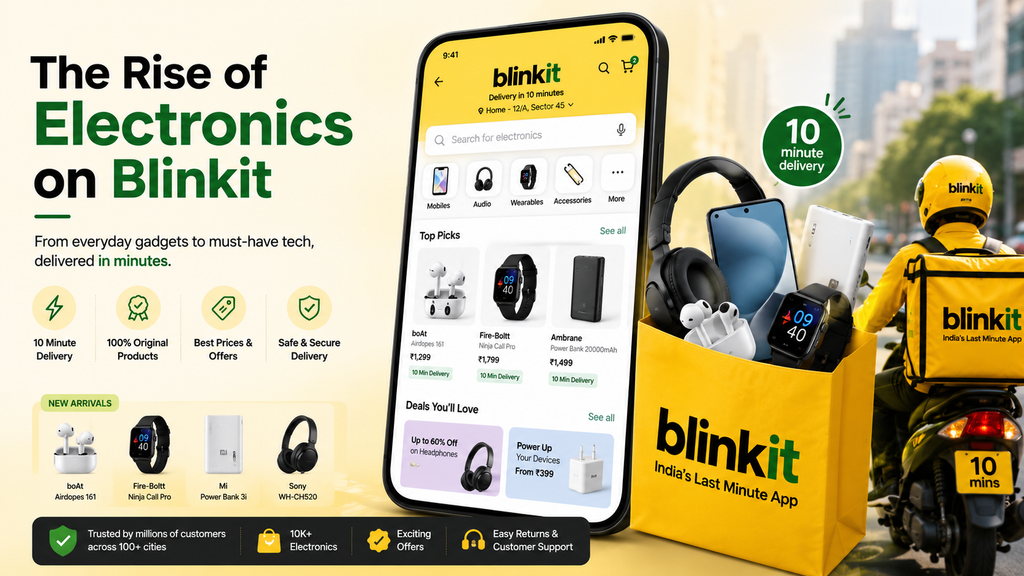
One of the most interesting developments is the growing role of electronics in quick commerce.
Smaller electronics and accessories are particularly suited to rapid delivery. Consumers may urgently need products such as headphones, charging accessories, smartwatches, computer peripherals or other gadgets. Instead of waiting for conventional e-commerce delivery, quick commerce can fulfil these immediate needs.
The category is also moving toward bigger-ticket products. Recent industry reporting indicates that Blinkit and other quick-commerce companies have been discussing partnerships with manufacturers to deliver larger appliances such as televisions, refrigerators, washing machines and microwave ovens within around 30 minutes.
That represents a significant change in consumer behaviour: quick commerce is beginning to compete not only for the “I need this now” grocery purchase, but potentially for planned retail purchases as well.
What Does This Mean for Brands?
For brands, Blinkit’s expansion creates a new opportunity—but simply getting listed is not enough.
Competition for visibility can increase as more brands and categories enter quick commerce. Product titles, images, descriptions, pricing, availability, inventory levels and promotions can all influence the customer’s purchase decision.
Brands entering this channel should focus on:
- Strong product listings that communicate the value proposition quickly
- Competitive pricing suited to the category and local market
- Consistent inventory availability across relevant locations
- High-quality product images that build customer confidence
- Category-specific promotions to improve discovery and conversion
- Performance monitoring to identify products and locations generating demand
For higher-value products, trust becomes even more important. Clear specifications, warranty information, authentic product presentation and reliable fulfilment can reduce purchase hesitation.
Quick Commerce Is Becoming a Retail Discovery Channel
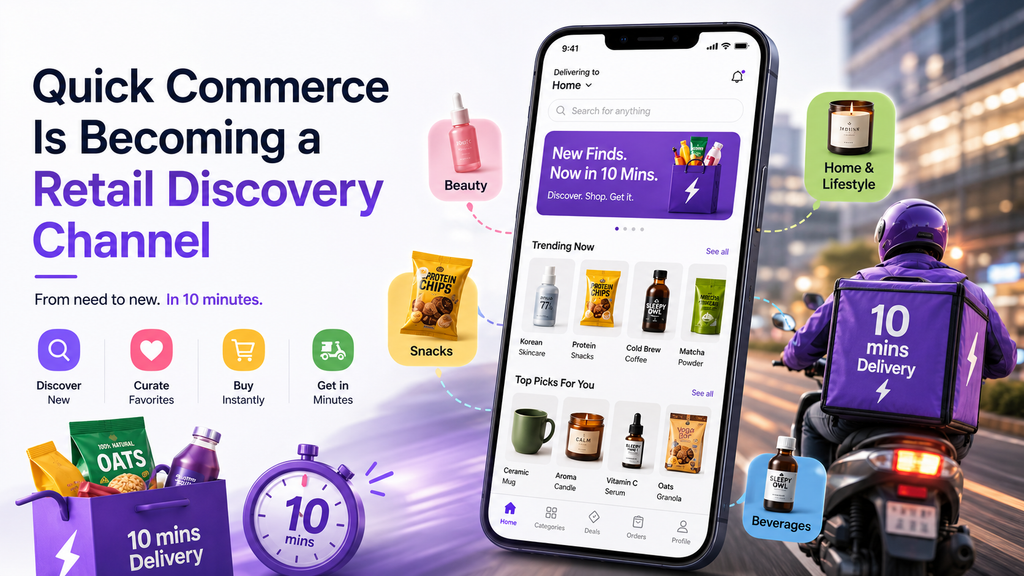
The bigger story is not simply that Blinkit sells electronics. It is that quick commerce is evolving from an emergency grocery service into a broader digital retail channel.
Blinkit’s recent growth has also been accompanied by a focus on assortment, geographic reach, store expansion and supply-chain efficiency. In its latest reported quarter, Blinkit added 200 net new stores, taking its network to 2,443, while its net order value increased 86% year over year.
As the platform expands its assortment, brands may increasingly view quick commerce as part of their overall e-commerce strategy rather than as a separate grocery channel.
How SalesStrive Can Help Brands Enter Quick Commerce
Expanding onto quick-commerce platforms requires more than uploading a product catalogue. Brands need the right onboarding strategy, product listings, inventory planning, pricing and ongoing account management.
SalesStrive helps brands build and manage their presence across modern e-commerce and quick-commerce channels. From product listing and catalog management to marketplace account management and performance marketing, the focus is on helping brands improve visibility and grow sales.
If your brand is ready to explore Blinkit or other quick-commerce platforms, having the right strategy can make the difference between simply being listed and actually generating orders.
Frequently Asked Questions
1. Is Blinkit moving beyond grocery products?
Yes. Blinkit has expanded its assortment beyond traditional grocery and household essentials into categories such as electronics, beauty, lifestyle and other products.
2. Can customers buy electronics on Blinkit?
Yes. Blinkit offers various electronics and accessories, and the broader quick-commerce industry is also exploring larger electronics and appliances. Availability varies by location and inventory.
3. Why is Blinkit expanding into high-value products?
Expansion can help quick-commerce platforms increase assortment, serve more consumer needs and create opportunities for higher-value transactions while making better use of their fulfilment infrastructure.
4. Can brands sell their products on Blinkit?
Yes. Blinkit operates a dedicated seller platform through which brands and businesses can register to sell products.
5. How can brands improve their Blinkit sales?
Brands should focus on accurate listings, high-quality images, competitive pricing, inventory availability, promotions and ongoing performance optimisation.
6. Is quick commerce becoming a competitor to traditional e-commerce?
For some product categories, yes. Quick commerce offers a major advantage when customers value immediate availability and fast delivery. However, traditional e-commerce remains important for broader assortment, planned purchases and products that do not require immediate fulfilment.
Conclusion
Blinkit’s move beyond grocery reflects a larger change in Indian consumer behaviour. As customers become accustomed to convenience and fast fulfilment, more product categories can become candidates for quick-commerce delivery.
Electronics and high-value products are particularly interesting because they can expand the role of quick commerce from frequent replenishment to immediate retail discovery and purchase.
For brands, this creates a clear opportunity: understand where quick commerce fits into your customer journey, optimise your product presence, maintain availability and use performance data to scale the right products.
The next phase of quick commerce may not be defined simply by how fast a product arrives. It may be defined by how many reasons consumers have to open the app in the first place.
2 Responses