
Walmart Marketplace vs Amazon: Which Is Better for Global Sellers?
For global eCommerce sellers, choosing the right marketplace can directly influence sales, profitability, brand visibility, and international growth. Walmart Marketplace vs Amazon is one of the most important comparisons for brands planning to enter or expand in the US eCommerce market.
Amazon offers massive customer reach, mature seller tools, and a well-established global ecosystem. Walmart Marketplace, meanwhile, provides growing opportunities, strong consumer trust, and comparatively lower marketplace competition in several categories.
So, which marketplace is better for global sellers: Amazon or Walmart? The answer depends on your business model, target customers, product category, fulfillment capabilities, and long-term expansion strategy.
Amazon vs Walmart Marketplace: Quick Overview
Amazon is generally the stronger choice for sellers looking for extensive customer reach, international expansion, and a mature marketplace ecosystem. Its seller infrastructure includes tools for advertising, fulfillment, analytics, product content, and global selling.
Walmart Marketplace is attractive to brands looking for access to a trusted retail audience and an expanding digital marketplace with fewer sellers competing for visibility. However, seller approval and marketplace requirements can be more selective.
Key Difference Between Amazon and Walmart
The main difference is the marketplace ecosystem. Amazon provides a larger and more established global selling environment, while Walmart offers a growing platform with opportunities for brands seeking an additional sales channel.
Amazon vs Walmart Marketplace for Global Sellers
For international sellers, Amazon often provides a more established route to cross-border eCommerce. Its global marketplace network, fulfillment infrastructure, and seller tools can make it easier for brands to expand into multiple countries.
Walmart is also increasing its international marketplace presence. However, sellers need to carefully evaluate country eligibility, business registration requirements, product compliance, inventory location, and fulfillment options before applying.
Which Marketplace Is Better for International Sellers?
If your goal is broad international expansion, Amazon may offer a more established ecosystem. If your primary goal is to enter or grow within the US market, Walmart Marketplace can be an important channel to consider.
Amazon vs Walmart Marketplace Fees: Which Is More Cost-Effective?
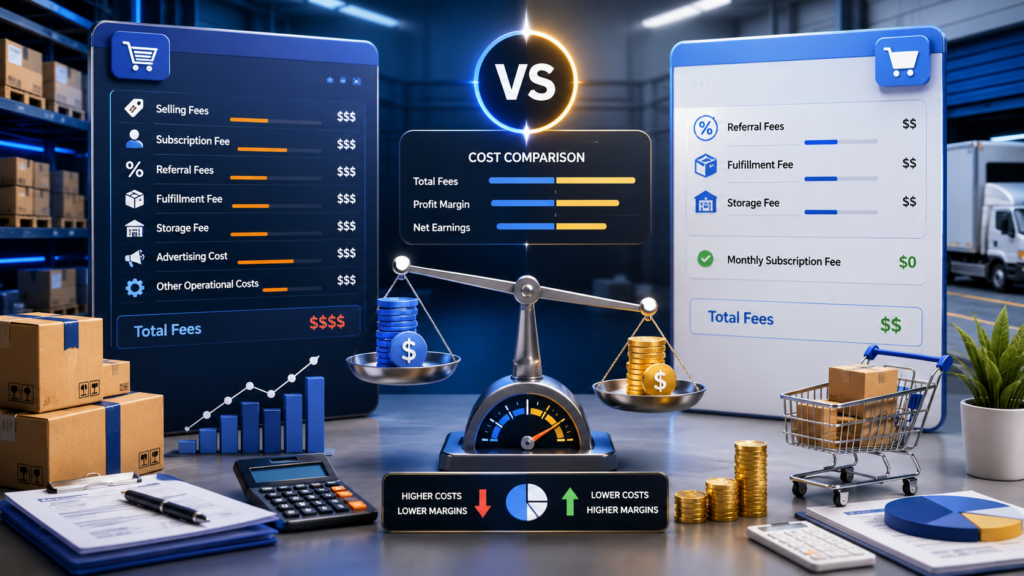
Marketplace fees can significantly affect your profit margins. Amazon typically combines selling fees with potential subscription, fulfillment, storage, advertising, and other operational costs, depending on the seller’s plan and fulfillment model.
Walmart Marketplace is often considered attractive because it generally does not charge a standard monthly subscription fee. Sellers typically pay referral fees, while additional fulfillment and storage costs apply when using Walmart Fulfillment Services.
What Costs Should Global Sellers Calculate?
Before choosing between Amazon and Walmart, sellers should calculate:
- Product cost
- Marketplace referral fees
- Fulfillment expenses
- Storage charges
- Advertising costs
- Returns and refunds
- Taxes and cross-border expenses
The most profitable marketplace is the one that delivers the best net profit after all operating costs, not simply the lowest selling fee.
Amazon vs Walmart Seller Competition
Competition is one of the biggest differences between the two platforms.
Amazon has a massive seller base, which means brands compete heavily for search visibility, reviews, pricing, advertising placements, and the Buy Box. Strong product listing optimization and continuous advertising are often essential for building visibility.
Walmart Marketplace generally has fewer sellers than Amazon, which can create opportunities for brands in selected categories. However, Walmart’s approval process and seller performance standards mean that businesses still need to maintain strong operational performance.
Is Walmart Marketplace Less Competitive Than Amazon?
In many categories, Walmart may have fewer sellers competing for visibility. However, competition varies based on product category, customer demand, pricing, listing quality, and seller performance.
Amazon FBA vs Walmart WFS: Which Fulfillment Model Is Better?

Fulfillment is another major consideration when comparing Amazon and Walmart.
What Is Amazon FBA?
Fulfillment by Amazon (FBA) allows sellers to store inventory within Amazon’s fulfillment network. Amazon can manage picking, packing, shipping, customer service, and returns.
What Is Walmart WFS?
Walmart Fulfillment Services (WFS) offers a similar fulfillment model for eligible Walmart sellers. It allows businesses to outsource fulfillment while focusing on product growth and marketplace management.
Which Fulfillment Option Should You Choose?
The best option depends on your inventory location, product size, order volume, shipping requirements, and target market. Global sellers should also consider whether their inventory can be efficiently positioned within the required country or region.
Amazon or Walmart: Which Marketplace Should You Choose?
Choose Amazon If You Want:
- Large-scale customer reach
- Global marketplace expansion
- A mature advertising ecosystem
- Established fulfillment infrastructure
- Access to multiple international markets
Choose Walmart Marketplace If You Want:
- Access to Walmart’s trusted customer base
- A growing marketplace opportunity
- Potentially lower seller competition
- A multi-channel selling strategy
- An additional US sales channel
Should You Sell on Both Amazon and Walmart?
For many established brands, the best answer may not be Amazon vs Walmart Marketplace, but Amazon and Walmart together.
A multi-channel strategy allows sellers to diversify revenue, reduce dependency on one marketplace, and reach different customer segments. However, managing listings, inventory, pricing, advertising, orders, and performance across multiple platforms can quickly become complex.
How SalesStrive Helps Global Sellers Expand
Expanding to Amazon and Walmart requires more than simply creating a seller account. Product listings, catalog optimization, marketplace compliance, advertising, inventory coordination, and ongoing account management all influence long-term performance.
SalesStrive helps brands manage their global marketplace journey with expert Global Seller Account Management. From marketplace onboarding and product listing optimization to performance monitoring and growth strategy, our team helps businesses build a stronger presence across international eCommerce platforms.
Ready to Expand Your Brand Globally?
If you are comparing Amazon vs Walmart Marketplace for global sellers, the right strategy starts with understanding where your products have the strongest opportunity to grow.
Ready to expand your brand across global marketplaces? Let SalesStrive manage your marketplace operations, optimize your seller performance, and help you build a scalable international eCommerce growth strategy.
Frequently Asked Questions
1. Is Amazon or Walmart better for global sellers?
Amazon is generally stronger for sellers prioritizing global reach and established international marketplace infrastructure. Walmart can be a valuable additional channel for brands targeting the US market and looking for multi-channel growth.
2. Is Walmart Marketplace less competitive than Amazon?
In many categories, Walmart has fewer sellers than Amazon, which may create more visibility opportunities. However, competition varies by product category, demand, pricing, and seller quality.
3. Which marketplace has lower seller fees: Amazon or Walmart?
Walmart is often attractive because it generally does not charge a standard monthly subscription fee. However, total costs depend on referral fees, fulfillment, storage, advertising, returns, and other expenses.
4. Is Amazon FBA better than Walmart WFS?
Neither is universally better. Amazon FBA may be more suitable for sellers seeking broader global infrastructure, while WFS can be useful for eligible brands focused on Walmart’s marketplace ecosystem.
5. Should I sell on both Amazon and Walmart?
For many growing brands, selling on both marketplaces can improve customer reach and reduce dependence on one sales channel. The strategy works best when inventory and marketplace operations are managed efficiently.
6. Can international sellers sell on Amazon and Walmart?
Yes, eligibility depends on marketplace requirements, seller location, business documentation, product category, compliance, and fulfillment capabilities. International sellers should evaluate these requirements before expanding.
Conclusion
So, Walmart Marketplace vs Amazon—which is better? Amazon remains a powerful choice for global reach, marketplace maturity, and international expansion. Walmart offers a valuable opportunity for brands looking to grow in the US market and diversify their marketplace presence.
For ambitious global sellers, the strongest strategy may be to evaluate both platforms based on product-market fit, costs, competition, fulfillment, and long-term growth potential.
Ready to expand your brand across global marketplaces? Partner with SalesStrive for expert marketplace management and build a scalable international eCommerce growth strategy.
 hello@salesstrive.in