What Products Are Non-Returnable on Quick Commerce Platforms?
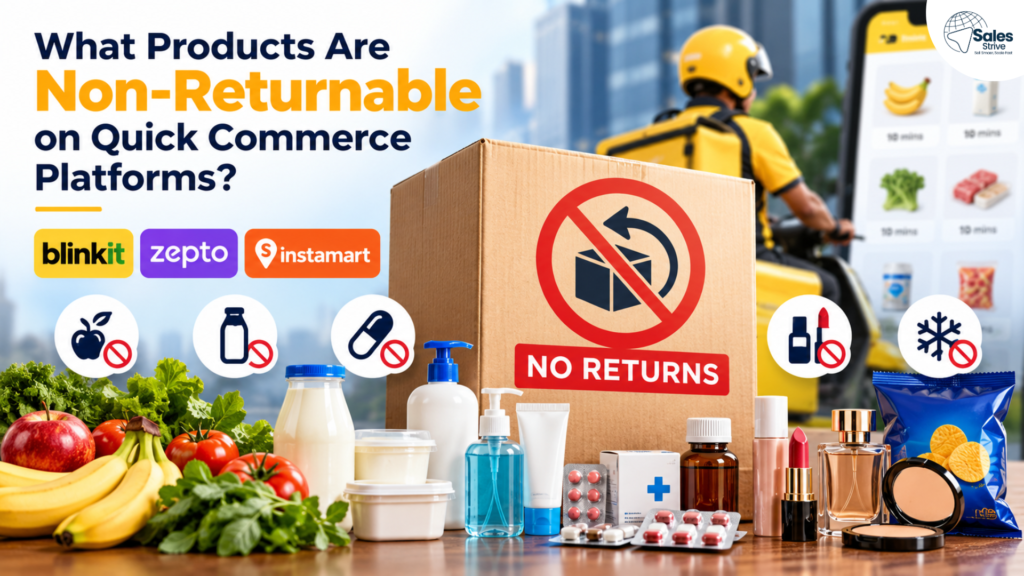
Quick commerce non-returnable products are becoming an important topic for brands and sellers as rapid-delivery platforms expand beyond groceries. Customers can now order groceries, personal care products, beauty items, electronics accessories and household essentials within a short delivery window. But what happens when a customer wants to return an item? The answer depends on the platform, product category, SKU and reason for the return. While some products may be eligible for returns or exchanges, others may follow a refund or replacement process instead. Understanding non-returnable products on quick commerce can help sellers prepare their catalogue, fulfilment process and customer-support strategy more effectively.
What Does Non-Returnable Mean in Quick Commerce?
A non-returnable product is an item that generally cannot be sent back through a standard return process after delivery. However, non-returnable does not always mean that customers have no resolution. Depending on the situation, a platform may provide a refund, replacement or another form of support when a product is damaged, expired, incorrect or missing. This distinction is important when understanding the quick commerce return policy. 2026 overview notes that major Indian quick-commerce platforms commonly use refund-based resolution for many grocery and consumable products, while selected non-grocery categories can have return or exchange options depending on eligibility and location.
What Products Are Usually Non-Returnable?
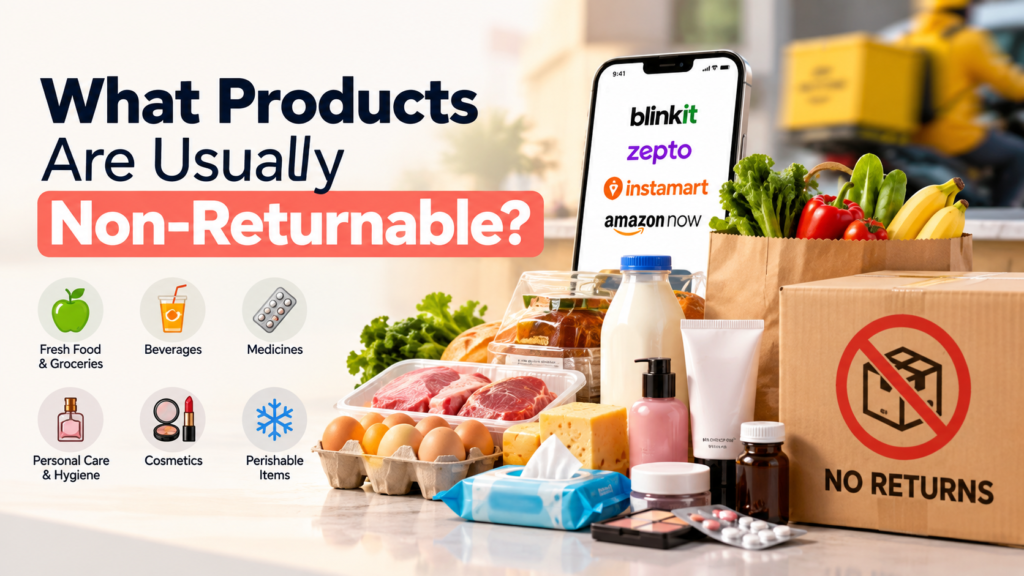
There is no single universal list of quick commerce products that cannot be returned. Policies can vary between platforms and product categories. However, several product types commonly have return restrictions.
1. Grocery and Perishable Products
Fresh food, fruits, vegetables, dairy products, bakery items and other perishables are commonly associated with restricted returns. These products have limited shelf life and may not be suitable for resale after delivery. As a result, quick commerce grocery returns are often handled through refunds or replacements rather than traditional reverse logistics.
2. Food and Beverages
Food, beverages and other consumable products may also have restricted return options, particularly after opening or use. If an item arrives damaged, expired or incorrect, the customer may need to report the issue through the platform’s refund or support process. For brands selling quick commerce products, maintaining correct expiry information and appropriate packaging is therefore important
3. Personal Care and Hygiene Products
Some personal care, beauty and hygiene products may have return restrictions because opening or using them can create safety, hygiene or resale concerns. Examples may include selected skincare, grooming, hygiene and beauty products. However, sellers should not assume that every product in these categories is automatically non-returnable. The applicable quick commerce return policy India should be checked for the specific platform and SKU.
4. Health and Safety-Sensitive Products
Certain health and safety-sensitive products can have stricter return requirements. Amazon seller guidance, for example, identifies categories such as grocery products, health and personal-care products, and products with specific shipping restrictions among items that may be non-returnable. This is an example of ecommerce policy rather than a universal rule for every quick-commerce platform.
5. Products With Shipping Restrictions
Certain products require special transportation or handling conditions. These requirements can affect whether a product can be returned through normal reverse logistics. For sellers, understanding shipping restrictions is therefore part of managing quick commerce seller policy requirements.
6. Selected Electronics and Accessories
Electronics are more category-specific. Some platforms may allow returns or exchanges for selected electronics and accessories, while other SKUs may have different conditions. Blinkit and Zepto have introduced return or exchange flows for selected non-grocery categories, including certain electronics and accessories, in eligible locations.
Why Are Some Quick Commerce Products Non-Returnable?
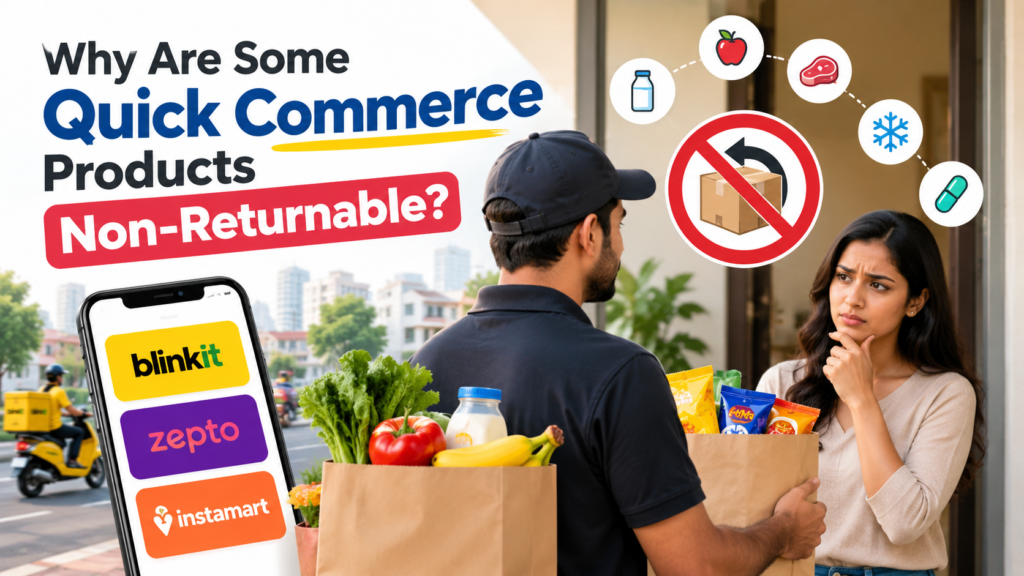
The operational model of quick commerce is different from traditional ecommerce. Products are often stored in nearby dark stores or fulfilment locations and delivered rapidly. Returning an item can require additional transportation, inspection, handling and inventory processing. For perishable products, the returned item may no longer be suitable for resale. This is one reason quick commerce returns often rely on refunds or replacements rather than conventional return logistics for certain categories. For quick commerce brands, preventing avoidable product issues is therefore especially important.
What Happens When a Non-Returnable Product Has a Problem?
A non-returnable product may still qualify for a resolution when there is a genuine fulfilment or product issue.
Common situations include:
- Damaged product
- Expired product
- Wrong item delivered
- Missing item
- Incorrect quantity
- Packaging damage
Depending on the platform, customers may report the issue through the app and provide supporting information or images.
This means quick commerce refund policy is just as important as the return policy when selling products through rapid-delivery channels.
How Can Sellers Reduce Return and Refund Issues?
Brands entering quick commerce for brands should prepare their operations before expanding their catalogue.
Maintain Accurate Product Listings
Product titles, images, descriptions, sizes, quantities and specifications should accurately represent the product delivered to customers.
Monitor Product Quality
Proper packaging can reduce damage during fast fulfilment and transportation.
Manage Expiry Dates
For food, beverages and other consumables, brands should maintain appropriate expiry tracking and stock rotation.
Keep Inventory Accurate
Stock availability should be monitored across fulfilment locations to reduce incorrect fulfilment and cancellations.
What Should Brands Know Before Selling Non-Returnable Products?
Selling non-returnable products in quick commerce requires more than simply uploading a catalogue.
Brands should understand product eligibility, fulfilment requirements, inventory planning, listing accuracy, customer experience and refund procedures.
A focused approach to quick commerce product returns can help sellers identify operational gaps before they affect customer satisfaction.
For brands expanding across Blinkit, Zepto, Instamart and other quick commerce platforms India, platform-specific planning is especially important.
How Sales Strive Helps Brands With Quick Commerce?
Managing quick commerce sellers requires continuous attention to catalogue quality, product visibility, inventory readiness and marketplace operations.
Sales Strive supports brands with ecommerce and quick commerce marketplace management, including seller account management, product listings, marketplace visibility, advertising and growth strategy.
Whether you are entering quick commerce for the first time or expanding an existing catalogue, the right strategy can help you manage products more effectively across multiple platforms.
Ready to Expand Your Brand on Quick Commerce?
Book a Free Audit with Sales Strive and discover how your brand can improve its product listings, visibility and marketplace operations across the growing quick-commerce ecosystem.
Conclusion
Quick commerce non-returnable products commonly include certain perishables, consumables, hygiene-sensitive products and other restricted categories. However, there is no universal list covering every platform and SKU.
The applicable quick commerce return policy can depend on the platform, product category, location and individual product. Some non-grocery products may also qualify for returns or exchanges.
For sellers, understanding non-returnable products on quick commerce, maintaining accurate listings, managing inventory carefully and reducing fulfilment errors can help create a better customer experience.
As quick commerce continues expanding into new categories, brands that understand quick commerce return policy India and platform-specific requirements will be better prepared to manage their marketplace operations.
Frequently Asked Questions
Common examples can include certain perishable products, consumables, hygiene-sensitive products and products with specific handling or shipping restrictions. Exact eligibility varies by platform and SKU.
Not necessarily. Quick commerce grocery returns depend on the platform, product and reason for the issue. Perishable products commonly have restricted return options and may instead use refund or replacement processes.
In some situations, yes. A non-returnable item may still qualify for a refund or replacement if it is damaged, expired, incorrect or missing, subject to the platform's applicable policy.
Not always. Selected electronics and accessories may have return or exchange options depending on the platform, SKU and service location.
Perishability, hygiene, product safety, resale limitations and reverse-logistics costs are among the reasons certain products may have return restrictions.
Sellers should maintain accurate listings, suitable packaging, inventory accuracy, expiry management and a clear process for handling customer complaints. They should also regularly review the relevant quick commerce seller policy and return requirements.
Ready to Simplify Your Quick Commerce Operations with SalesStrive?
SalesStrive helps brands improve their product listings, catalogue quality, inventory readiness, visibility, and marketplace operations across leading quick-commerce platforms.
 hello@salesstrive.in
Your Trusted Marketplace Growth Partner
Get Your FREE Quick-Commerce Consultation Today!
Amazon | Flipkart | Myntra | Ajio | Meesho | Blinkit | Zepto | Noon | Walmart