
Flipkart Minutes Crosses 1,000 Stores: What It Means for Sellers in 2026
Quick commerce in India is moving beyond groceries and major metro cities. One of the biggest developments in 2026 is the rapid expansion of Flipkart Minutes, Flipkart’s quick commerce business.
In June 2026, Flipkart Minutes crossed 1,000 fulfilment centres across more than 130 cities, marking a major expansion of its quick commerce network. By September 2026, the network had grown further to more than 1,200 micro-fulfilment centres across 150+ cities.
For sellers and brands, this expansion raises an important question: what does Flipkart Minutes expansion mean for sellers in 2026?
The answer is more opportunities, but also a greater need for the right product, inventory and marketplace strategy.
What Is Driving Flipkart Minutes Expansion?
Flipkart Minutes was launched in 2024 as Flipkart’s entry into the growing quick commerce market. The platform has expanded rapidly, particularly into Tier 2 and smaller cities.
Reports from June showed that around 90 of the 130 cities served by Minutes were smaller markets. Flipkart has also been focusing on larger store formats, with some locations able to accommodate thousands of SKUs across categories such as groceries, personal care, mobiles and electronics.
This matters because quick commerce is no longer limited to customers looking for milk, snacks or other immediate needs. Flipkart Minutes has been expanding its assortment into categories including beauty, electronics, speciality grocery and pet products.
For sellers, that creates a wider potential product opportunity.
What Does 1,000+ Stores Mean for Sellers?

1. More Local Market Opportunities
A larger Flipkart Minutes fulfilment network means products can potentially reach customers closer to their location.
The expansion into Tier 2 and Tier 3 cities is particularly relevant for brands that want to move beyond traditional metro-focused ecommerce. Smaller cities can have different purchasing behaviour, including larger baskets and demand for everyday products.
For sellers, this makes geographical expansion an important part of their quick commerce strategy.
2. Inventory Becomes More Important
Quick commerce depends heavily on product availability.
A customer choosing a 10-minute delivery service generally expects the product to be available nearby. If a product repeatedly goes out of stock, sellers can lose potential orders and customer visibility.
Therefore, Flipkart Minutes inventory management should focus on demand forecasting, stock availability, replenishment and location-level inventory planning.
The goal is not simply to list more products. It is to ensure that the right products are available in the right locations.
3. Product Selection Matters
The growth of quick commerce does not mean every ecommerce product is automatically suitable for the model.
Products that solve immediate needs, have repeat-purchase potential, are easy to fulfil locally or benefit from convenience can have stronger relevance.
At the same time, Flipkart Minutes is expanding beyond traditional daily essentials. Its growing assortment includes beauty, grooming, speciality grocery, electronics and other categories.
Sellers should therefore evaluate:
- Customer demand
- Purchase frequency
- Product size and weight
- Selling price
- Local demand
- Inventory availability
- Competition
- Delivery suitability
How Can Sellers Prepare for Flipkart Minutes?
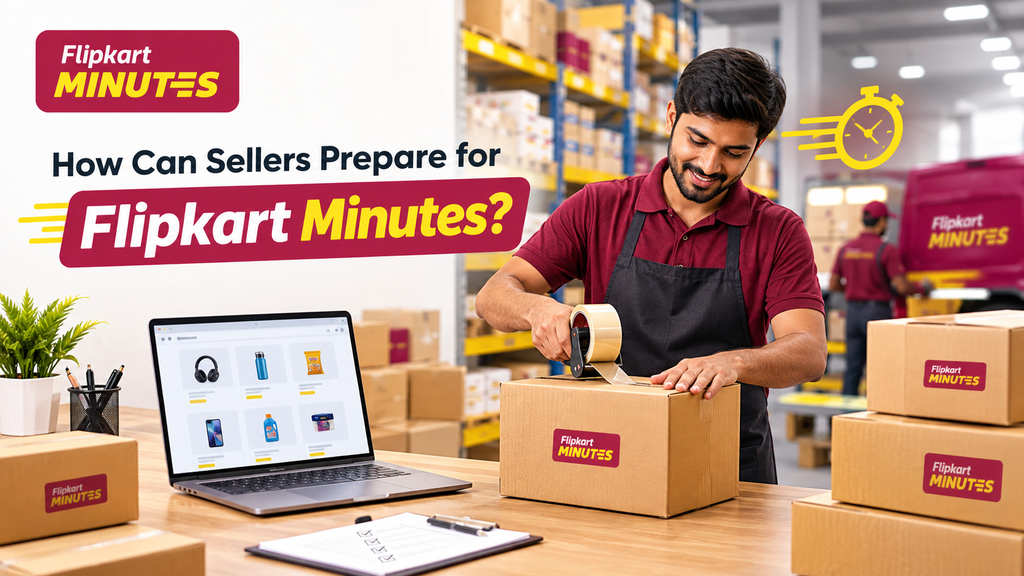
Getting products onto a quick commerce platform requires more than simply uploading a catalogue.
Brands should first identify products that are suitable for fast-delivery demand. Next comes catalogue preparation, product information, pricing, inventory planning and operational readiness.
A strong Flipkart Minutes seller onboarding strategy should consider product titles, descriptions, images, category placement and product attributes.
Search visibility also matters. Clear product information can help customers understand what they are buying quickly, especially when they are comparing multiple products.
Sellers should also monitor stock levels and product performance regularly. A product that performs well in one city may not necessarily perform the same way in another.
Why Quick Commerce Should Be Part of a Seller’s 2026 Strategy
India’s quick commerce market is becoming increasingly competitive, with platforms such as Blinkit, Zepto, Swiggy Instamart, Amazon Now and Flipkart Minutes expanding their networks.
Recent reporting shows that Flipkart Minutes has continued expanding beyond its 1,000-centre milestone, while also broadening its product assortment and reach into smaller cities.
For ecommerce sellers, this creates an opportunity to treat quick commerce as an additional sales channel rather than depending entirely on traditional marketplaces.
However, success depends on execution.
Brands need the right assortment, accurate catalogues, competitive pricing, sufficient inventory and continuous performance monitoring.
How SalesStrive Can Help
Expanding into quick commerce can become complicated when sellers have to manage marketplace onboarding, catalogues, product visibility, inventory and performance across multiple platforms.
SalesStrive helps ecommerce brands build and manage their marketplace growth strategy across ecommerce and quick commerce channels.
From seller account management and catalogue optimisation to marketplace SEO, product visibility, advertising and growth support, the focus is on helping brands build a more structured online selling operation.
If you are planning to explore Flipkart Minutes seller onboarding or expand your brand into quick commerce, the first step is understanding whether your products, catalogue and current marketplace setup are ready.
Conclusion
Flipkart Minutes crossing 1,000 fulfilment centres was an important milestone, but its continued expansion shows that quick commerce is becoming a broader ecommerce opportunity.
For sellers, the opportunity is not simply about joining another platform. It is about understanding local demand, choosing the right products, maintaining inventory and creating a catalogue that can compete in a fast-moving shopping environment.
As quick commerce expands into more cities and categories, sellers who prepare their operations early can build a stronger foundation for marketplace growth in 2026 and beyond.
Frequently Asked Questions
1. What is Flipkart Minutes?
Flipkart Minutes is Flipkart’s quick commerce service designed to provide fast delivery of products through a network of local fulfilment centres.
2. How many Flipkart Minutes stores are there?
Flipkart Minutes crossed 1,000 fulfilment centres across 130+ cities in June 2026. By September 2026, reports indicated that its network had grown to more than 1,200 centres across 150+ cities.
3. Can sellers sell products on Flipkart Minutes?
Brands and sellers can explore Flipkart’s quick commerce ecosystem based on applicable onboarding, category and operational requirements. Sellers should evaluate product suitability, catalogue readiness and inventory capabilities before expanding.
4. What products are suitable for Flipkart Minutes?
Products with strong local demand, repeat-purchase potential and suitability for fast fulfilment can be considered. The platform has expanded beyond groceries into categories including beauty, personal care, electronics and speciality products.
5. Why is inventory management important for quick commerce?
Quick commerce depends on local product availability. Maintaining the right inventory levels can help sellers reduce stockouts and meet customer demand more effectively.
6. How can ecommerce sellers prepare for quick commerce?
Sellers should review their product assortment, catalogue quality, pricing, inventory planning, fulfilment readiness and marketplace visibility before entering quick commerce.
 hello@salesstrive.in