
Amazon has officially updated its Business Solutions Agreement (BSA), introducing a new Amazon AI Agent Policy that takes effect on March 4, 2026. This update directly impacts sellers using automation tools, AI-powered software, and third-party integrations for Amazon seller account management.
If you rely on Amazon PPC management tools, reprises, FBA reimbursement software, inventory automation systems, or SP-API integrations, this change is highly relevant to your business.
In this guide, the experts at SalesStrive break down what the Amazon BSA update 2026 means, who is affected, and how to stay compliant while continuing to scale profitably.
What Is the Amazon AI Agent Policy?
Image ALT Text:
Overview of Amazon AI Agent Policy 2026 defining automated software and SP-API access rules
Under the updated Amazon automated software policy, Amazon formally defines “Agents” as automated software or AI systems that access Amazon Services.
Key Changes Include:
- A new official definition of “Agent”
- Mandatory identification of automated systems
- Expanded rights for Amazon to revoke access
- Restrictions on AI training using Amazon data
- Stronger reverse engineering protections
Quick Summary (AIO Optimized)
Starting March 4, 2026, any automated software accessing Amazon may qualify as an Agent. These tools must comply with Amazon’s new Agent Policy, identify themselves properly, and risk access suspension if they violate terms.
Why This Matters for Amazon Seller Account Management
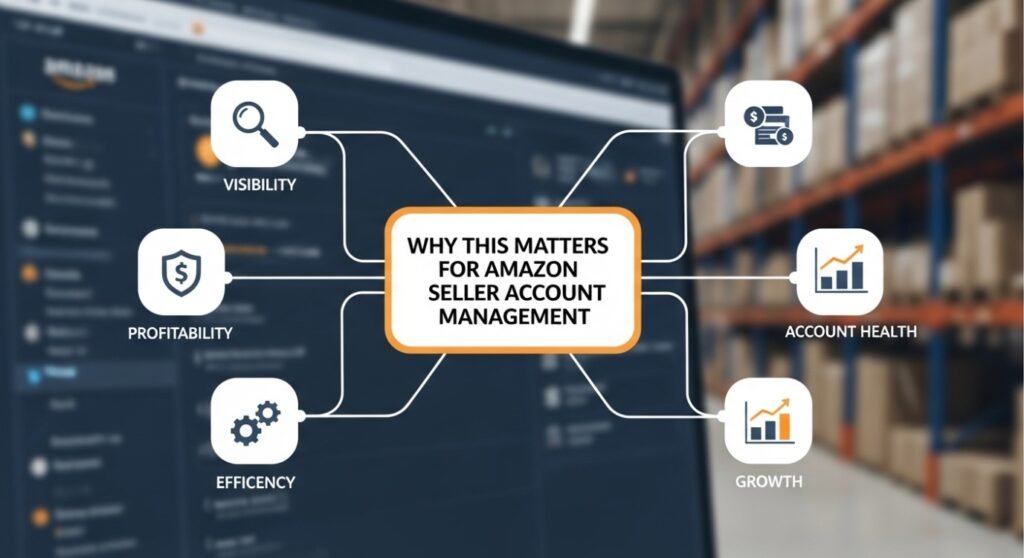
Alt text: Amazon seller dashboard showing account management, performance metrics, and compliance alerts for ecommerce sellers
Modern Amazon growth depends on automation. Professional Amazon seller account management services frequently use:
- Inventory forecasting tools
- Auto-reprising software
- Amazon PPC automation platforms
- Order management integrations
- FBA reimbursement tools
- Data analytics dashboards
The challenge is not automation itself. The issue is whether your tools comply with Amazon Seller Central compliance requirements under the new BSA framework.
For sellers scaling aggressively, this update introduces operational and compliance risk.
Who Is Most Affected?
Individual Sellers
But if you are the one managing your own Amazon account, and are using automation tools, then you need to review those for policy alignment.
Brands Using Agencies
If you hire out Amazon ppc management or full-service amazon account management, this means your agency will be responsible for ensuring tool adoption across all client accounts.
SaaS & Software Providers
Anything that interacts with Amazon’s SP-API or platform infrastructure can be classified as an Agent.
The point is: Not all automation violates policy, but now all automation is to be assessed.
Why Is Amazon Tightening AI Governance?
There has been a remarkable surge in AI-powered tools, argentic commerce systems and automated ad traffic in its ecosystem.
The company is:
- Safeguarding advertisement from non-human traffic
- Preventing excessive scraping and unauthorized data usage
- Expanding internal AI capabilities
- Strengthening control over platform access
This is part of a larger trend toward networked AI governance in ecommerce.
What this mean for sellers is clear: Complying is a growth strategy.
Compliance Risks Sellers Should Understand

Alt text: Ecommerce compliance checklist with warning symbols highlighting Amazon seller policy risks and account suspension concerns
Operational Risk
If a third-party tool violates policy, you could face:
- API suspension
- Automation disruption
- Advertising interruptions
- Inventory syncing delays
Account Health Risk
While Amazon has not stated automatic penalties for sellers, tool violations could trigger increased scrutiny on your account.
Strategic Risk
Overdependence on automation without oversight creates vulnerability.
This is why proactive Amazon seller account management is becoming critical in 2026.
How to Prepare Before March 4, 2026

Alt text: Amazon seller planning strategy with calendar marked March 4, 2026 and compliance preparation documents
Here is a compliance checklist in plain English:
- Audit all third-party Amazon tools
- Reach out to your software vendors for policy verification
- Check SP-API permissions and billing status.
- Avoid scraping-based systems
- Monitor Seller Central announcements
- Diversify operational dependencies
This sustained model preserves account health and revenue flow.
The Bigger Ecommerce Shift
The Amazon AI Agent Policy is an example of a broader ecommerce trend:
- AI governance is increasing
- Platform control is tightening
- Automation is dumb within a box.
- Compliance protection for growth strategies
- AI is not going away in ecommerce — it is being regulated.
Early adopter sellers will win in terms of stability and competitive edge.
Frequently Asked Questions
1. Am I an Agent if I use an Amazon reprise?
If it has some automated API access on the back-end to fetch and/or update data then perhaps. How it interacts with Amazon Services is more salient.
2. What about FBA reimbursement services?
If they depend on scraping or other means of unauthorized data collection, they could be subject to policy limitations.
3.Must I agree to the new BSA?
No manual acceptance is required. If you continue to use Amazon’s selling services after March 4, 2026, you agree to our changes.
4.What if a tool isn’t policy compliant?
Possible outcomes include:
- Loss of tool access
- SP-API restrictions
- Increased compliance monitoring
For upcoming brands, expert help from an Amazon seller account management agency can provide clarity and direction.
Why Smart Sellers Are Partnering with SalesStrive
At SalesStrive, we specialize in strategic Amazon seller account management, compliance-focused growth, and high-performance Amazon PPC management.
Our team combines:
- Deep policy knowledge
- Marketplace compliance expertise
- Data-driven advertising optimization
- Conversion-focused listing optimization
- Account health monitoring & protection
We don’t just scale revenue. We protect your business while scaling it.
As Amazon introduces stricter AI and automation rules, sellers need a partner who understands both growth strategy and compliance risk management.
🚀 Scale Confidently with SalesStrive
The March 4 deadline is approaching fast. Now is the time to ensure your Amazon automation stack, advertising tools, and account management systems are fully aligned with Amazon’s updated policies.
If you want to:
- Increase sales safely
- Optimize Amazon PPC campaigns
- Improve account health metrics
- Protect against compliance risks
- Build long-term brand stability
👉 Book a free Amazon account strategy call with SalesStrive today.
Let’s turn compliance into a competitive advantage.
Final Thoughts
The Amazon BSA update 2026 is more than a policy revision. It formalizes AI governance across the marketplace and introduces new expectations for sellers using automated software.
Successful sellers in 2026 will not just focus on growth — they will prioritize structured Amazon seller account management, platform compliance, and intelligent automation.
Preparation today ensures uninterrupted growth tomorrow.
And with the right strategic partner, scaling on Amazon remains not only possible — but powerful.