Quick Commerce Service Onboarding: Step-by-Step Guide
Introduction: Why Quick Commerce Onboarding Matters Today
Quick commerce has transformed how consumers shop for daily essentials. With platforms like Blinkit, Zepto, Swiggy Instamart, and BigBasket Now delivering products in under 10–30 minutes, customer expectations have shifted toward speed, convenience, and availability. For brands and sellers, this change presents both an opportunity and a challenge.
Many businesses want to enter the quick commerce ecosystem but feel overwhelmed by onboarding requirements, documentation, compliance checks, product listing standards, and fulfillment setup. Delays or errors during onboarding can result in lost revenue and missed market share.
This guide simplifies the quick commerce service onboarding process. You’ll learn what onboarding means, why it matters, a step-by-step walkthrough, common challenges, and best practices to succeed—so you can onboard faster, avoid costly mistakes, and scale confidently.
What Is Quick Commerce Onboarding?
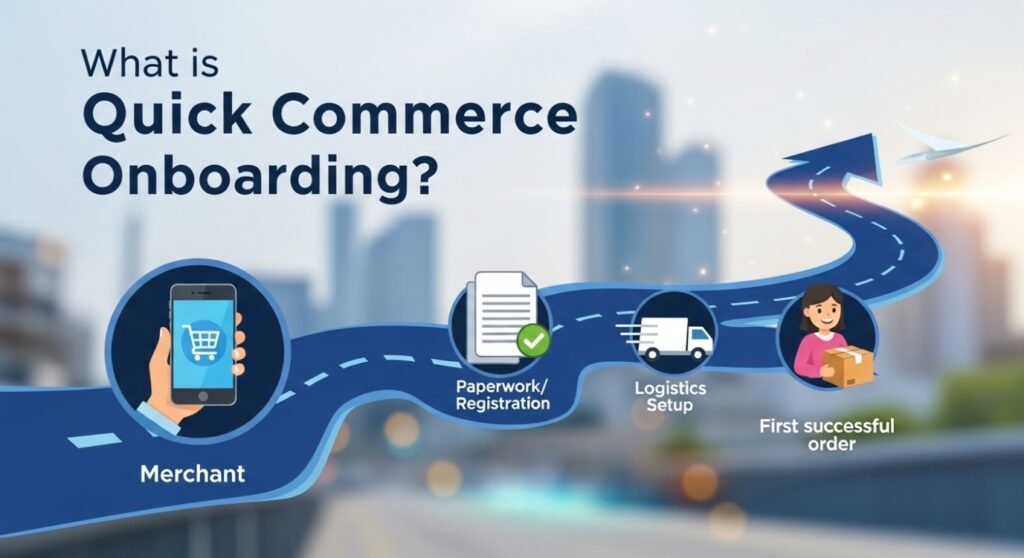
Quick commerce onboarding refers to the systematic way in which a business signs up, confirms, and adapts its products and operations to a quick commerce platform. This allows the sellers to stock their goods in local fulfillment centers or dark stores and get the products to nearby customers in a matter of minutes.
Quick commerce places a much stronger emphasis on aspects such as real, time inventory accuracy, rapid fulfillment, strict compliance, and local demand alignment as compared to traditional ecommerce onboarding. A smooth onboarding procedure means quicker approvals, less troublesome operations, and better platform visibility.
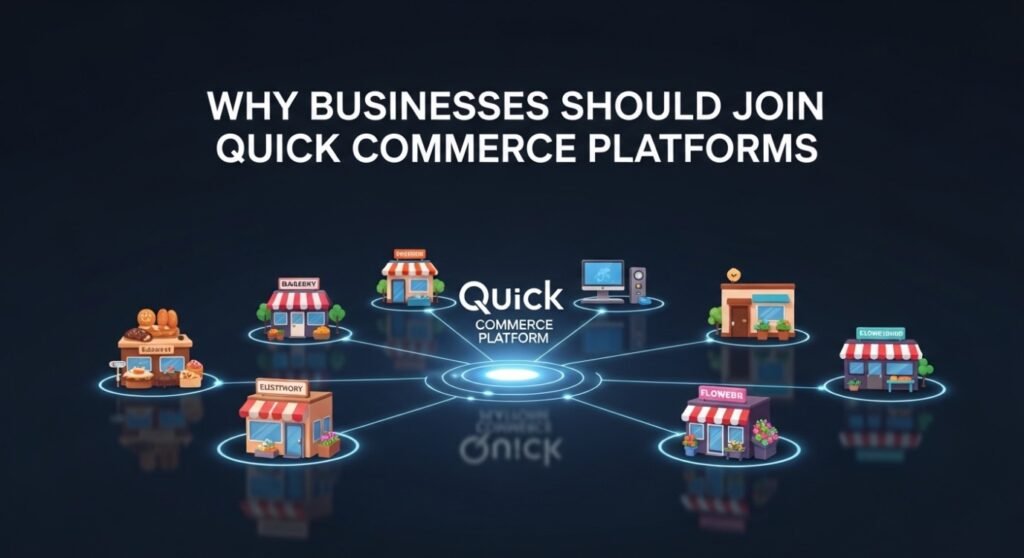
Why Businesses Should Join Quick Commerce Platforms
Key Benefits of Quick Commerce Onboarding
Quick commerce platforms provide direct access to highly motivated, local customers. Products get almost immediate exposure, which leads to impulse buying and increased order frequency. For a lot of brands, this means quicker stock turnover and better cash flow.
Showing up on reputable platforms also helps to build brand trust. Customers equate quick delivery with dependability, which can greatly increase the likelihood of repeat purchases and customer loyalty. Moreover, the platforms offer sales and demand data that can be used to make more informed pricing and inventory decisions.
Industries That Benefit the Most
Quick commerce is particularly effective for:
- FMCG and packaged food brands
- Dairy, fresh produce, and frozen food suppliers
- Beauty and personal care products
- Pharmacy and wellness items
- Grocery and household essentials
If your products are frequently purchased or time-sensitive, quick commerce can become a strong growth channel.
Step-by-Step Quick Commerce Service Onboarding Process
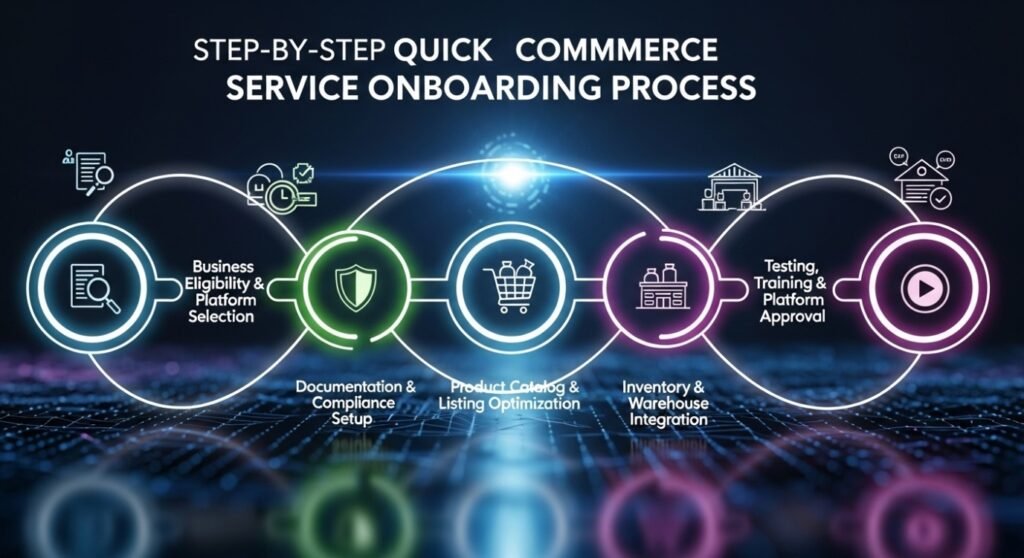
Step 1: Business Eligibility & Platform Selection
The first step involves selecting the appropriate marketplace depending on your type of products, the area you want to target, and your ability to supply. Some of the widely used platforms are Blinkit, Zepto, Swiggy Instamart, Amazon Fresh, and BB Now.
Different platforms have different requirements for sellers, price of services, quality standards, and operating procedures. Thoroughly go through these to check if they fit in with your profit margin, shipping capabilities, and objectives for expansion.
Step 2: Documentation & Compliance Setup
Compliance is critical for quick approval and long-term account stability. Most platforms require thorough verification before allowing sellers to go live.
Common documentation checklist includes:
✔ GST registration
✔ PAN card and bank account details
✔ FSSAI license (for food and consumables)
✔ Trade license
✔ Brand authorization (for resellers or distributors)
✔ Product-specific certifications, if applicable
Submitting accurate and complete documents reduces approval delays and prevents future account issues.
Step 3: Product Catalog & Listing Optimization
Product listing quality directly affects visibility and conversions. During onboarding, sellers must upload SKU data, pricing, inventory levels, and product details.
Use clear, keyword-optimized product titles and descriptions that match platform search behavior. High-quality images, correct pack sizes, and accurate pricing improve discoverability and reduce order cancellations. Well-optimized listings also perform better in platform algorithms.
Step 4: Inventory & Warehouse Integration
Quick commerce relies on hyperlocal fulfillment. Sellers must integrate inventory with dark stores or designated fulfillment centers. Real-time stock updates are essential to prevent overselling or stockouts.
This step includes setting reorder thresholds, aligning packaging standards, and defining order processing workflows. Efficient inventory integration ensures faster delivery times and higher customer satisfaction.
Step 5: Testing, Training & Platform Approval
Before going live, platforms conduct trial orders and quality checks. Sellers receive access to dashboards for order management, performance tracking, and settlement reports.
Training teams on order handling, inventory updates, and issue resolution is essential. Once testing is complete and benchmarks are met, the platform grants final approval.
Common Challenges During Quick Commerce Onboarding
Many businesses unnecessarily complicate the onboarding process with a series of mistakes. They submit the wrong documents, make errors in their product listings, and their inventory data is often incompatible or inconsistent. Errors in pricing, either too high or too low, can jeopardize the seller’s approval and also affect performance.
Sellers are often delayed by their lack of understanding of the platform compliance requirements. If sellers hire professionally experienced onboarding consultants, adhere strictly to platform guidelines, and utilize inventory automation tools, they can, to a great extent, eliminate obstacles and thus expedite their process.
Best Practices to Succeed After Onboarding
However, to grow after onboarding, one must get into the habit of regular optimizations. One of the ways is to constantly have products available and at the same time check customer reviews diligently. Ratings and feedback have a direct impact on the visibility power of products on quick commerce platforms.
You can use platform analytics to help you identify trends in demand for your product as well as regulate prices dynamically. To attract more customers, you could run a promotion or participate in a seasonal campaign. Also, by keeping your product catalog updated, concentrating on your best sellers, and using good quality packaging, you would be able to help your customers experience better quality resulting in lower return rates as well as fewer damaged goods.
Future of Quick Commerce in India
Quick commerce in India is anticipated to grow very fast as shoppers show more and more preference for the delivery of their orders within the shortest time. Platforms are looking to extend their product range beyond groceries and have started offering items such as electronics, wellness, and lifestyle products.
Further improvements in AI, based demand forecasting, inventory management, and last, mile delivery will make the onboarding and operations of Quick commerce more efficient and smoother. The pioneers of this industry who finish their onboarding and commencement of operation latest today will have an edge over the others for a longer time.
Conclusion: Start Your Quick Commerce Onboarding Strategically
Quick commerce onboarding is not simply signing up for an account; it is a strategic decision that leads to quicker growth, greater visibility, and enhanced customer engagement. Companies that treat onboarding as a project with detailed planning, compliance preparedness, and customer centricity approach can reap the benefits of a significant increase in revenue.
Brands that have a well, thought, out onboarding process and follow best practices can confidently become a part of the quick commerce ecosystem and grow in a sustainable way. The advantage is with those who adopt the new changes first and do everything perfectly from day one.
Frequently Asked Questions: Quick commerce onboarding
- What is the concept of quick commerce?
Q-commerce, also referred to as quick commerce, is a type of e-commerce where emphasis is on quick deliveries, typically in less than an hour.
- What is blinkit onboarding?
For brands and manufacturers, this creates a huge opportunity to reach high-intent customers exactly when they need your product. But unlike Amazon or Flipkart, selling on Blinkit requires a structured onboarding process involving approvals, category managers, APOB setup, and product verification.
- How long does quick commerce onboarding take?
Typically, onboarding takes between 7 to 21 days, depending on documentation accuracy and platform verification timelines. - Do small businesses qualify for quick commerce onboarding?
Yes. Small and medium businesses can onboard if they meet compliance, supply consistency, and quality requirements. - Which quick commerce platform is best for sellers?
The best platform depends on your product category, target location, margins, and logistics capability. - Is GST mandatory for quick commerce onboarding?
In most cases, yes. GST registration is required by leading quick commerce platforms. - Can one brand sell on multiple quick commerce platforms?
Yes. Many brands operate across multiple platforms to maximize reach and reduce dependency on a single channel.
- What is the biggest onboarding mistake sellers make?
Incomplete documentation and poor inventory planning are the most common mistakes that delay approvals and impact performance.
One Response